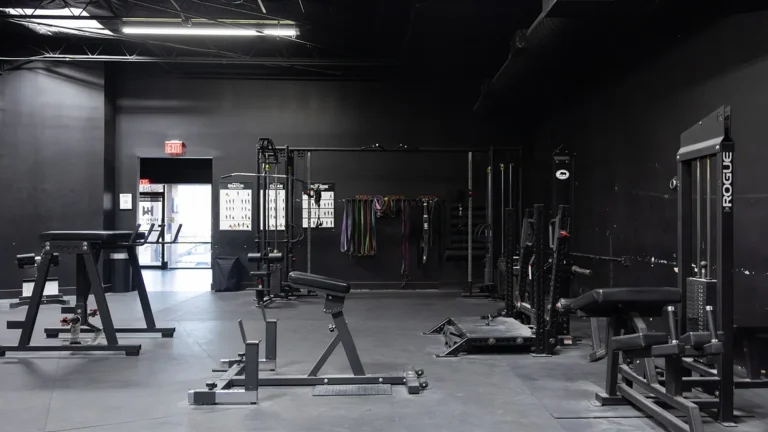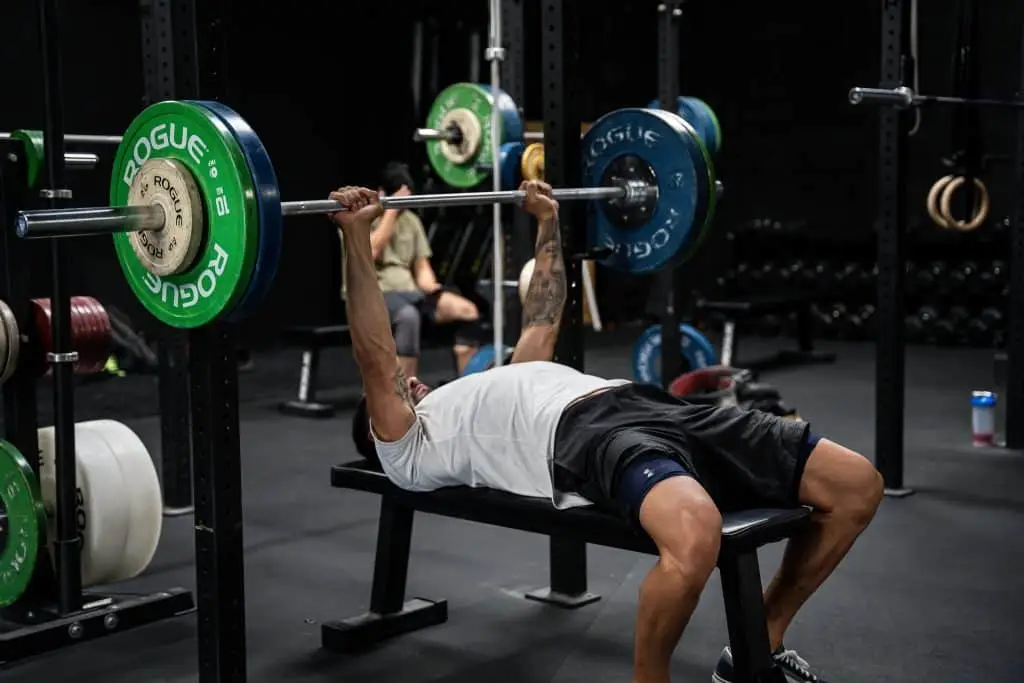
Most people show up to group strength training classes, follow the workout, get tired, and leave. They do this for weeks or months and wonder why their progress stalls.
The problem isn’t the program. The problem is they don’t understand how group strength training classes work or how to train within the structure to maximize results.
This guide explains the training system we use in our Dallas group strength training classes, how the programming progresses, and what you need to do to get stronger consistently over months and years—not just get tired for an hour.
If you’re taking group strength training classes here or considering it, this is required reading.
Members who want to turn consistent attendance into measurable progress can build strength within a coached, structured environment through Hunger In The Wild’s Group Fitness Classes in Dallas.
Group strength training classes at our facility run in 12-16 week cycles depending on where they fall in the calendar year. Here’s the structure:
Weeks 1-2: Transition Period (GPP Focus)
General physical preparedness. Movement quality, work capacity, preparing your body for the next strength cycle.
Weeks 3-6: Phase 1 (Base Building)
Higher volume, moderate intensity. Building muscle and work capacity.
Weeks 7-10: Phase 2 (Strength Development)
Increasing loads, moderate volume. Getting stronger.
Weeks 11-14: Phase 3 (Peak Strength)
Heavy loads, lower volume. Expressing maximal strength.
Weeks 15-16 (if included): Phase 4 (Testing/Deload)
Final week may include testing on core lifts, followed by deload before the next cycle begins.
Then the cycle repeats. But you don’t start over at square one. You start at a higher baseline than the previous cycle because you got stronger.
This is linear periodization—progressively building toward peak strength over 10-14 weeks of loaded training (after transition), then starting a new cycle at higher numbers.
You can’t train heavy all the time. You’ll burn out or get injured.
You can’t train light all the time. You won’t get stronger.
Periodization solves this by cycling through phases that build on each other. Each phase creates adaptations that prepare you for the next phase.
High volume builds muscle and work capacity → Strength phases convert that into force production → Peak phases let you express maximal strength → Testing measures improvement → Transition prepares you for the next cycle.
The two-week transition period between cycles isn’t rest. It’s deliberate GPP (general physical preparedness) work that prepares your body for the next 10-14 week strength push.
Focus on Movement Quality: We drill fundamental movement patterns. Squatting mechanics. Hip hinge patterns. Pressing and pulling technique. If your form has gotten sloppy during the heavy phases, this is where we clean it up.
Work Capacity Development: Higher rep ranges, shorter rest periods, more conditioning. Building your ability to handle volume in the upcoming cycle.
Address Weaknesses: If you have specific limitations—mobility issues, weak positions, imbalances—transition is when we address them.
Mental Reset: Multiple months of progressive loading is mentally taxing. Transition gives you a mental break while still training productively.
Don’t skip transition weeks thinking you’ll “lose gains.” You won’t. The adaptations you built over 10-14 weeks don’t disappear in two weeks.
Use transition to:
Transition isn’t deload. It’s preparation. Treat it seriously.
After transition, you start the 10-14 week linear progression. Each 4-week phase has a specific purpose.
Goal: Build muscle, increase work capacity, establish movement patterns
Rep Ranges: 8-12 reps per set
Intensity: 60-75% of your max
Volume: 3-5 sets per exercise
Rest: 90-120 seconds between sets
Why this phase matters: You’re not lifting heavy yet, but you’re building the foundation that allows you to lift heavy later. Muscle growth happens here. Work capacity increases here. If you skip this phase or don’t take it seriously, you’ll struggle in later phases.
What you should feel: Muscular fatigue. Pump. Burn. Not heavy nervous system stress. You should finish workouts tired but not destroyed.
Goal: Convert muscle into strength
Rep Ranges: 5-8 reps per set
Intensity: 75-85% of your max
Volume: 3-5 sets per exercise
Rest: 2-3 minutes between sets
Why this phase matters: The muscle you built in Phase 1 now gets trained to produce more force. Weights feel heavier. Reps are harder. But you’re getting objectively stronger.
What you should feel: Heavier loads. More difficulty. Longer rest periods. This is where strength actually develops. You should be setting rep PRs—lifting weights for reps that you couldn’t handle before.
Goal: Maximize force production
Rep Ranges: 3-5 reps per set
Intensity: 85-92% of your max
Volume: 3-4 sets per exercise
Rest: 3-4 minutes between sets
Why this phase matters: You’re now lifting loads that are legitimately heavy. This is where you adapt to high-intensity work. Your nervous system learns to recruit maximum muscle fibers. Technique under heavy loads gets refined.
What you should feel: Heavy. Every set requires focus. Rest periods are longer because you need them. Recovery between sessions matters more. This is hard training.
Goal: Express maximal strength, test improvements
Rep Ranges: 1-3 reps per set, or testing singles
Intensity: 92-100% of your max
Volume: 2-3 sets per exercise
Rest: 4-5 minutes between sets
Why this phase matters: When the cycle is longer (14-16 weeks), we include a final intensification phase where you express the strength built over the previous phases. Testing may occur to benchmark progress before transitioning to the next cycle.
What you should feel: Every rep is heavy. You need full recovery between sets. If testing occurs, this is where you demonstrate improvement.
Our group strength training classes build strength in six fundamental movements. Every cycle, we’re trying to increase your numbers in these lifts:
Why: Builds lower body strength, quad and glute development, carries over to every athletic movement
Progression: We track your 1RM and rep maxes at different percentages. If you back squat 300 lbs in testing, the goal is 310-315 lbs by the next cycle’s testing.
Why: Posterior chain strength, hip hinge pattern, total body power development
Progression: Similar to squat—consistent small increases cycle to cycle. 5-10 lb increases per cycle add up to massive strength over a year.
Why: Upper body pushing strength, chest and tricep development
Progression: Upper body lifts progress slower than lower body. 2-5 lb increases per cycle is realistic and significant.
Why: Overhead strength, power development, full body integration
Progression: Teaches explosive hip drive combined with overhead pressing. Functional carryover to everything.
Why: Vertical pulling strength, lat development, relative strength measure
Progression: Bodyweight movements progress through added load or increased reps. If you can’t do chin-ups yet, we scale with bands or ring rows.
Why: Vertical pulling variation, grip strength, back thickness
Progression: Similar to chin-ups but with pronated grip. Different emphasis on lats and grip.
These six lifts cover every major movement pattern: squat, hinge, horizontal push, vertical push, vertical pull (two variations). Everything else is accessory work supporting these lifts.
If you’re not tracking, you’re guessing. Here’s what to log:
Testing Numbers: When testing occurs (typically every 12-16 weeks), record maxes on all six core lifts. Write these down. This is your benchmark.
Rep PRs: During the cycle, you’ll hit rep PRs—weights for reps you couldn’t do before. Track these. They’re progress markers between testing periods.
Working Weights: Track what weights you’re using in each phase. If Phase 2 of this cycle feels easier than Phase 2 of last cycle at the same percentages, you got stronger.
Cycle-to-cycle improvement:
These seem like small increases. They are. But small increases compounded over multiple cycles equal massive strength gains over a year.
If you add 10 lbs to your squat every cycle and run 3-4 cycles per year, that’s 30-40 lbs in a year. A 250 lb squatter becomes a 280-290 lb squatter. That’s significant.
Here’s what derails people even when they’re following the program in group strength training classes:
Phase 1 is base building. The weights should feel light. If you’re grinding reps in Phase 1, you’re going too heavy.
This phase is about volume and technique. Save the heavy grinding for Phase 3 and 4.
People treat transition like a rest week and half-ass it. Then they start Phase 1 unprepared and struggle.
Transition prepares you for the next cycle. Use it properly.
The program works if you follow it. If you miss 30-40% of sessions, you’re not following the program. You’re doing random workouts that happen to look like the program.
Aim for 80%+ attendance. If you can’t commit to that, group strength training classes might not be the right fit.
When the program says 70%, don’t load 85% because you “feel good today.” The program is designed with specific intensities for specific adaptations.
Trust the percentages. They exist for a reason.
You can’t recover from training if you’re eating like a bird and sleeping 5 hours a night.
Strength training creates demand. Food and sleep fulfill that demand. Without adequate recovery, you’re just accumulating fatigue.
Testing occurs at the end of longer cycles (typically 14-16 weeks). Not Week 3. Not Week 10. When the program calls for it.
Stop trying to max out every session. Follow the program. Hit rep PRs when they’re there. Save true maxes for when testing is scheduled.
Not everyone in group strength training classes lifts the same weights. Here’s how scaling works:
Phase 1: Focus entirely on technique. Use light weights. Perfect the movement pattern. Don’t worry about hitting prescribed percentages if you don’t have established maxes yet.
Phases 2-3: Gradually increase loads while maintaining perfect form. You’ll progress faster than experienced lifters initially (newbie gains).
Phase 4: You might skip maximal loading and continue building technical proficiency. That’s fine. You don’t need to test heavy if you’ve only been training 12 weeks.
Use percentages based on your most recent tested max. If you back squatted 300 lbs in testing:
Simple math. Follow the percentages.
Work with the coach to modify loads and movements. The program structure stays the same, but we adjust exercises and intensities to work around limitations.
You’re still following periodization. Just with modified movements.
The program prescribes volume and intensity. But individual response varies.
If these are true, talk to your coach about adding accessory volume or an extra training day.
If these are true, reduce volume by 10-20% or skip one session per week until you recover.
More training isn’t always better. Adequate training plus adequate recovery is better.
Accessory exercises support the six core lifts. They’re not optional, but they’re also not the priority.
Do them. Don’t skip them because you’re tired from main work.
But don’t overthink them. Accessories aren’t where you prove toughness. They’re strategic support work. Follow prescribed loads and reps.
When the cycle includes testing (typically in 14-16 week cycles), here’s how to show up ready to perform:
The program reduces volume in the final week before testing. You’re peaking, not accumulating more fatigue.
72 hours out: Last heavy session. Then only light movement or rest.
48 hours out: Light activity only. Walking. Stretching. No lifting.
24 hours out: Rest. Hydrate. Sleep well. Eat normally.
Testing day: Warm up properly. Follow the coach’s instructions on attempts. Don’t let ego make you jump 20 lbs between attempts.
When testing occurs, lifts are typically spread across several days to avoid fatigue: Bench press → Squat → Deadlift → Push press → Chin-ups/Pull-ups
For each lift:
Don’t bomb out trying to hit Instagram numbers. Test what you’re actually capable of.
After completing a cycle (12-16 weeks), you get a 2-week transition period before the next cycle starts. Use this time strategically:
If you just tested maxes, your body is fatigued. If you finished a cycle without testing, you’ve accumulated 10-14 weeks of training stress. Week 1 should be light:
Week 2 ramps up slightly:
By the end of Week 2, you should feel recovered, mobile, and ready to start Phase 1 of the next cycle.
This program works in group strength training classes. We’ve run hundreds of athletes through this system. It produces consistent strength gains cycle after cycle.
But it only works if you actually follow it.
That means:
The program doesn’t need to be complicated. Linear periodization works because it’s systematic, progressive, and sustainable.
You don’t need a new program. You need to follow this one for multiple cycles and watch your numbers climb.
Hunger in the Wild
Group Strength Training Classes | Dallas Design District
1350 Manufacturing St Suite 204
Dallas, TX 75207
(682) 558-3165
hungerinthewild.com
Classes run Monday-Friday at 6:00 AM, 12:00 PM, 5:30 PM and 6:30 PM
Saturday at 8:00 AM, 9:00 AM and 10:45 AM
Show up. Follow the program. Track your numbers. Get stronger. Repeat.
📅 Book a Free Personal Training Consultation and Facility Tour Today!
📍 Schedule a Free Consultation to Learn More About Our Group Fitness Classes!
🔗 Check Out Our Online Training Programs and Remote Coaching Services!
🔗 InBody Analysis – Learn more about the technology we use to track progress.