HYROX looks simple on paper. Eight 1km runs. Eight workout stations. How hard could it be?
Then race day hits and you realize you made critical HYROX training mistakes that are now costing you minutes on the clock. Your legs are cooked by Station 4. The sleds feel twice as heavy as they did in the gym. You’re walking between stations while watching better-prepared athletes cruise past you.
Most HYROX athletes make the same preventable HYROX training mistakes. Some are training errors that happen months before race day. Others are tactical blunders that happen in the first 10 minutes of competition.
This guide breaks down the 10 most common HYROX training mistakes and exactly how to fix them. Whether you’re training for your first race or trying to improve your PR, avoiding these errors will save you serious time.
Visit Hunger In The Wild’s
HROX Training Classes in Dallas.
In This Article:
- The Running Mistake That Ruins Your Race
- Why Your Sled Technique is Costing You Minutes
- The Pacing Error 90% of First-Timers Make
- Training Mistakes That Show Up on Race Day
- Transition Inefficiencies You’re Missing
- Nutrition and Hydration Errors
- Equipment Choices That Slow You Down
- Mental Mistakes That Break Your Race
- How to Train HYROX in Dallas
- What HYROX Training Actually Requires
Mistake 1: Underestimating the Running Volume
The biggest surprise for first-time HYROX athletes is how much running there actually is.
Eight 1km runs equals 8 kilometers total. That’s 5 miles. Between strength stations. While your heart rate is spiking. After pushing sleds and doing burpee broad jumps.
Most people train HYROX like a strength event with some running mixed in. That’s backwards. HYROX is fundamentally an endurance race with strength stations breaking up the runs.
Why This Kills Your Race:
If your aerobic base isn’t strong enough, every run gets progressively harder. By Run 5 or 6, you’re struggling to maintain pace. Your legs are heavy. Your breathing is labored. The strength stations feel impossible because you’re already gassed from the running.
Research shows that VO2 max and running economy are among the strongest predictors of HYROX performance. If you can’t run well under fatigue, you can’t race well.
How to Fix It:
Build Your Aerobic Base First Before you worry about wall balls and sleds, make sure you can run 8km comfortably. Not fast. Comfortably.
Your HYROX training should include:- 3-4 runs per week minimum
- Long easy runs (60-90 minutes at conversational pace)
- Tempo runs at goal HYROX pace
- 1km repeats to practice the specific demand
Practice Compromised Running Running fresh is different from running after pushing a sled. Train both.
Example workout: Run 1km, do 50m sled push, run 1km. Repeat 4-6 times. This teaches your body to maintain running form and pace under fatigue.
Know Your Sustainable Pace Your HYROX running pace is closer to half-marathon pace than 5K pace. It should feel controlled, not aggressive. If you’re breathing hard on Run 1, you’re going too fast.
Mistake 2: Terrible Sled Technique
The sled push and pull are where most HYROX races fall apart. Not because of strength, but because of technique.
Watch any HYROX race and you’ll see the pattern: Athletes attack the sleds with maximum effort, poor positioning, and no strategy. Three minutes later, their legs are destroyed and they still have five more stations to complete.
Why This Kills Your Race:
Bad sled technique does three things:
- Wastes massive amounts of energy
- Spikes your heart rate unnecessarily
- Fries your legs for the remaining runs
The HYROX carpet makes sleds feel significantly heavier than gym floors. If you haven’t trained for this, race day is a brutal wake-up call.
How to Fix It:
Sled Push Technique:- Get low. Hips down, torso at 45 degrees. Drive through your legs, not your arms.
- Stay tight. Keep your core engaged. No sagging or rounding.
- Short, powerful steps. Don’t overstride. Think “push the ground away.”
- Break it into segments. Four 12.5m pushes with brief rests beats one death-march 50m push.
Sled Pull Technique:- Hand-over-hand consistently. Don’t take huge pulls and then rest. Keep steady tension.
- Use your legs. This isn’t an arm exercise. Drive with your legs while pulling.
- Stay balanced. Don’t lean back so far you lose your footing.
Train Heavier Than Race Weight If you’re training with race weight on a gym floor, you’re not preparing for the HYROX carpet. Add 10-20% more weight in training. When you hit race day, the sleds will feel manageable instead of shocking.
Mistake 3: Going Out Too Fast
Adrenaline is high. Music is blasting. You’re surrounded by hundreds of athletes. The starting gun goes off and you sprint that first 1km like it’s a 5K PR attempt.
This is one of the most common HYROX training mistakes, especially for first-timers.
Why This Kills Your Race:
Starting too aggressively causes:
- Premature glycogen depletion
- Early lactate accumulation
- Cardiovascular fatigue that compounds over 90+ minutes
- Mental breakdown when you realize you have 7 more runs to go
That fast first run doesn’t gain you much time. But it costs you significantly in the back half of the race.
How to Fix It:
Start Conservative Your first 1km should feel easy. Almost too easy. You should be able to hold a conversation if needed.
This is hard mentally. Everyone around you will be going faster. Ignore them. They’ll blow up at Station 6. You’ll be passing them.
Pace the Early Stations Station 1 (SkiErg) and Station 2 (Sled Push) cannot win your race, but they can break it.
On the SkiErg: Go 5-10 seconds slower per 500m than you would on a fresh 2km effort. The time you “lose” here is negligible compared to the energy you save.
On the Sled Push: Don’t try to hero it. Break it into manageable segments. Your legs need to last for 7 more runs.
Negative Split Your Race The best HYROX performances are negative splits—getting faster in the second half. Train this way. Practice starting controlled and finishing strong.
Mistake 4: Training Stations in Isolation
Most people train running on some days and strength stations on other days. They never combine them.
This is like training for a triathlon by swimming, biking, and running separately but never practicing transitions.
Why This Kills Your Race:
HYROX isn’t running OR stations. It’s running THEN stations THEN running again. Repeatedly. For 90 minutes.
Doing 100 wall balls when you’re fresh is completely different from doing them at Station 8 after 7km of running and 7 other stations. If you’ve only trained fresh, race day is going to hurt.
How to Fix It:
Practice Compromised Training At least once a week, combine runs with station work:
Example 1: 1km run + SkiErg 1000m + 1km run + Sled push 50m + 1km run
Example 2: 5x (400m run + 20 wall balls + 400m run)
Example 3: Full or partial HYROX simulations every 2-3 weeks
Simulate Race Conditions Don’t just practice movements. Practice them tired. Practice them when your heart rate is elevated. Practice them when you don’t want to.
That’s what race day feels like.
Mistake 5: Ignoring the Roxzone
The Roxzone is the transition area between runs and stations. It’s not an official station, but it matters.
Most first-timers unconsciously slow down in the Roxzone. They walk. They catch their breath. They waste 10-15 seconds per transition.
Do that 16 times (8 transitions in, 8 transitions out) and you’ve lost 2-4 minutes.
How to Fix It:
Treat the Roxzone as an Extension of Your Run Don’t slow down when you enter the transition area. Maintain your running pace until you’re at the station.
Similarly, when you finish a station, start running immediately. Don’t walk to the exit.
Study the Venue Layout Before your race starts, walk the course. Know where each station is. Visualize your path through the Roxzone.
Efficiency in the Roxzone can account for 10-15% of your total race time. That’s significant.
Mistake 6: Poor Movement Standards
HYROX has strict movement standards. If you don’t meet them, you get no-reps. No-reps cost time and energy.
The most common violations:
Burpee Broad Jumps: Chest must touch the ground every rep. Many athletes skip this under fatigue.
Wall Balls: Ball must hit the target line. Many athletes go too low when tired.
Rowing: Must complete full 1000m. The monitor doesn’t lie.
How to Fix It:
Learn the Standards Read the HYROX rulebook. Watch videos of proper movement standards. Know exactly what counts and what doesn’t.
Practice Perfect Reps Under Fatigue It’s easy to maintain standards when fresh. It’s hard when you’re 60 minutes into a race and your quads are screaming.
Train the movements when you’re tired. Make perfect reps non-negotiable even when it sucks.
Mistake 7: Wearing the Wrong Shoes
Footwear matters more in HYROX than most people think.
Many beginners wear CrossFit shoes (Metcons, Nanos) because they’re good for functional movements. The problem? HYROX is 50%+ running, and CrossFit shoes are terrible for running.
How to Fix It:
Prioritize Running Shoes HYROX is a running event with strength stations, not a strength event with running. Your shoes should reflect that.
Look for:
- Good cushioning for 8km of impact
- Sufficient grip for sled work (test this in training)
- Secure fit (heel shouldn’t slip during burpees or sleds)
Test Your Shoes in Training Whatever shoes you plan to race in, train in them. Specifically, test them on sleds. Make sure:
- Your feet don’t slip when pushing
- Your heel doesn’t pop out during heavy efforts
- They’re comfortable for 90+ minutes of work
Don’t show up on race day with untested footwear.
Mistake 8: Nutrition and Hydration Failures
HYROX lasts 60-150 minutes depending on your fitness level. That’s long enough for nutrition to matter.
Common mistakes:
- Trying new foods or supplements on race day
- Not hydrating properly in the days leading up
- Eating too close to race time and getting GI distress
- Ignoring hydration during the race in hot venues
How to Fix It:
Test Everything in Training Whatever you plan to eat or drink on race day, test it during long training sessions first. Your stomach needs to know what to expect.
Pre-Race Fueling:- 2-3 hours before: Moderate carbs, moderate protein, low fat
- Example: Toast with peanut butter and banana
- Avoid: High fiber, high fat, anything new
During Race:- Most people don’t need fuel for races under 90 minutes
- If over 90 min: Quick carbs (gel, sports drink) between stations
- Small sips of water as needed, don’t overhydrate
Hydration Strategy:- Begin hydrating 2-3 days before the race
- Consider electrolyte supplementation if racing in warm conditions
- Take small drinks during the race, not huge gulps
Mistake 9: Overtraining and Under-Recovering
HYROX training is intense. The temptation is to do more, more, more. More running. More stations. More simulations.
This is how you get injured or burned out.
Why This Kills Your Race:
Your body adapts during recovery, not during training. If you’re constantly hammering yourself without adequate rest:
- You don’t recover between sessions
- Your performance stagnates or declines
- Injury risk increases dramatically
- You show up to race day tired instead of fresh
How to Fix It:
Follow a Structured Program Don’t wing your training. Follow a periodized plan that builds intensity over time and includes deload weeks.
Prioritize Recovery- Sleep 7-9 hours per night (this is non-negotiable)
- Take at least 1-2 full rest days per week
- Include easy recovery runs (not every run should be hard)
- Use active recovery: light cycling, mobility work, stretching
Listen to Your Body If you’re constantly tired, sore, or unmotivated, you’re probably overtraining. Back off before you get hurt.
Mistake 10: Training Only the HYROX Movements
Some athletes think HYROX training means only doing SkiErg, sleds, rows, wall balls, and the other race stations.
This is too narrow.
Why This Kills Your Race:
General strength and conditioning create the foundation for HYROX performance. If you only train the specific movements, you miss the underlying capacity that makes those movements stronger.
For example:
- Squats improve sled push, lunges, wall balls, and rowing
- Deadlifts build posterior chain strength for sled pulls
- Pull-ups develop pulling capacity for SkiErg and rows
- Core work stabilizes everything
How to Fix It:
Include Foundational Strength Work 2-3 times per week, train movements that build general capacity:
- Squats (front, back, goblet)
- Deadlifts and RDLs
- Presses (overhead, push press)
- Rows and pull-ups
- Core work (planks, carries)
This doesn’t replace HYROX-specific training. It supports it.
Common HYROX Training Mistakes: What Proper Training Requires
Now you know the most common HYROX training mistakes. Here’s what proper training actually looks like to avoid them:
Phase 1: Base Building (Weeks 1-4)
Focus: Aerobic capacity and movement quality
- 3-4 easy runs per week (30-60 minutes)
- 2-3 strength sessions (foundational lifts)
- 1-2 station introduction sessions (light technique work)
This phase isn’t sexy. You’re building the foundation.
Phase 2: Strength & Capacity (Weeks 5-9)
Focus: Build strength endurance and work capacity
- 3-4 runs per week (add tempo runs and intervals)
- 2-3 strength sessions (increasing loads)
- 2 station sessions (heavier sleds, higher volume wall balls)
- 1-2 conditioning sessions (mixed-modal work)
You’re working harder now. Building resilience.
Phase 3: Sport-Specific Prep (Weeks 10-13)
Focus: HYROX-specific demands and race strategy
- 3-4 runs (1km repeats at race pace, compromised running)
- 3 station sessions (always under fatigue)
- Partial and full simulations every 2 weeks
This is where training looks like racing.
Phase 4: Peak & Taper (Weeks 14-15)
Focus: Reduce volume, maintain intensity, arrive fresh
- Lighter training week 14
- Final simulation at race pace
- Minimal training week 15 (race week)
Trust the taper. Show up fresh.
How to Train HYROX in Dallas
Avoiding HYROX training mistakes requires the right training environment, equipment, and coaching.
Here’s what you actually need to prepare for HYROX properly:
HYROX-Specific Equipment
Most Dallas gyms don’t have what you need to train HYROX properly:
- Sleds with appropriate loading and surfaces
- SkiErg machines
- Concept2 rowers
- Wall ball targets at proper height
- Sandbags and farmers carry implements
- Space to practice full station sequences
Without this equipment, you’re guessing what race day will feel like.
Coaches Who Understand HYROX
Generic fitness coaching doesn’t translate to HYROX. You need coaches who:
- Have competed in HYROX themselves
- Understand pacing strategy specific to the format
- Can teach proper sled technique
- Know how to program compromised training
- Have prepared athletes for competition
Structured Programming
Random HYROX workouts from Instagram won’t prepare you for race day. You need:
- Periodized training that builds over months
- Progressive overload on running and stations
- Regular simulations to test pacing
- Recovery built into the program
HYROX Training at Hunger in the Wild
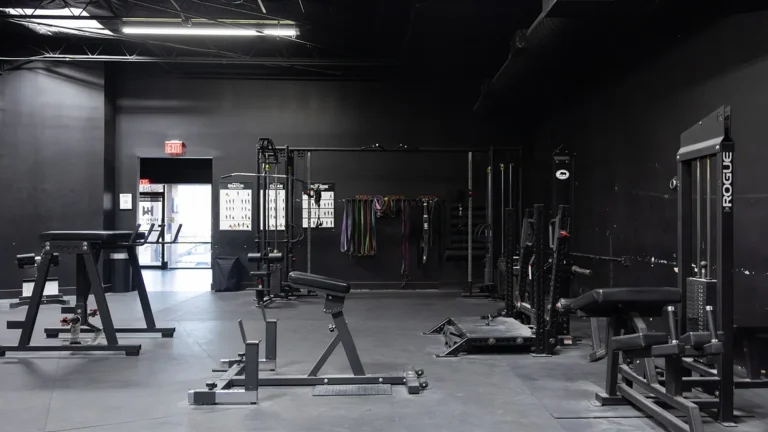
Located in the Dallas Design District, Hunger in the Wild is a strength training and conditioning facility specializing in HYROX preparation, Olympic weightlifting, and functional fitness.
What makes it different for HYROX athletes: HYROX-Specific Equipment and Training Space:- Competition-grade sleds on turf for realistic race preparation
- SkiErg and Concept2 rowers
- Professional lifting platforms for strength development
- Full functional fitness setup including wall balls, sandbags, and farmers carry implements
- Dedicated training space designed for hybrid athletes
- 24/7 gym access for members training on their own schedule
HYROX Coaching and Classes: Ash Morris-Williams leads HYROX training with experience competing in multiple races. HYROX-specific coaching includes structured programming, pacing strategy, station technique work, and race preparation.
Options include:- HYROX group classes with structured programming
- 1-on-1 personal training for individualized race prep
- Competition preparation coaching for athletes targeting specific events
- Online coaching for remote athletes in the Dallas-Fort Worth metroplex and beyond
Strength Training Foundation: Beyond HYROX-specific work, the facility offers Olympic weightlifting coaching and strength & conditioning classes that build the foundational capacity HYROX demands. Group fitness classes focus on progressive strength development, not random workouts.
Built for Hybrid Athletes: Whether you’re preparing for HYROX Houston, HYROX Dallas, or building general hybrid fitness, the facility and coaching are structured for athletes who train with purpose—not just people who work out.
The Bottom Line: HYROX Rewards Preparation
HYROX punishes training mistakes. Going out too fast. Bad sled technique. Weak aerobic base. Poor pacing. Inadequate recovery.
But it rewards preparation.
Athletes who train smart—who build a strong aerobic base, practice stations under fatigue, nail their pacing strategy, and show up fresh—have great races.
You can avoid every HYROX training mistake on this list. You can prepare properly. You can show up to HYROX ready to execute.
It just requires the right training, the right equipment, and the right coaching.
Hunger in the Wild Strength Training & Conditioning | HYROX Training | Olympic Weightlifting
1350 Manufacturing St Suite 204
Dallas, TX 75207
Dallas Design District | Serving Dallas–Fort Worth metroplex
(682) 558-3165 hungerinthewild.com 24/7 gym access for members | Group classes | Personal training | Online coaching
Train smart. Race hard. Avoid the HYROX training mistakes that cost you time.