What to Expect at Your First HYROX Race
A HYROX race is eight 1-kilometer runs paired with eight functional fitness stations, done back to back for one combined time. Your first one is far more approachable than it looks, as long as you know what is coming.
HYROX has become the fastest-growing fitness race in the world, and it is built for everyday athletes, not just elite competitors. The format never changes from city to city, so once you understand the sequence and how race day flows, you can walk onto the floor at the Kay Bailey Hutchison Convention Center in Dallas knowing exactly what to expect. This guide covers the format, the divisions, what the day actually feels like, how to pace it, and how to train so your first race goes the way you want it to.
The HYROX format: 8 runs, 8 stations
Every HYROX race is the same worldwide. You run 1 kilometer, complete a station, then head back out for another kilometer. You repeat that until all eight stations are done. That is eight runs and eight stations, roughly 8 kilometers of running broken up by functional work.
Here is the order, which never changes, with the standard Open division weights:
| Order | Station | Distance / Reps | Open (Men) | Open (Women) |
|---|---|---|---|---|
| 1 | SkiErg | 1,000m | Bodyweight | Bodyweight |
| 2 | Sled Push | 50m | 152kg | 102kg |
| 3 | Sled Pull | 50m | 103kg | 78kg |
| 4 | Burpee Broad Jumps | 80m | Bodyweight | Bodyweight |
| 5 | Rowing | 1,000m | Bodyweight | Bodyweight |
| 6 | Farmers Carry | 200m | 2 x 24kg | 2 x 16kg |
| 7 | Sandbag Lunges | 100m | 20kg | 10kg |
| 8 | Wall Balls | 100 reps | 6kg to 10ft | 4kg to 9ft |
Remember that a 1-kilometer run comes before every station on that list. For a full breakdown of each station, including technique and weights for every division, read our complete guide to all 8 HYROX stations.
Which division should a first-timer choose?
HYROX offers four main divisions, and picking the right one is the first decision you will make when you register. The weights and the running are the same; what changes is how much of it you personally do.
- Open: You complete the full race solo at standard weights. This is where most first-timers belong.
- Pro: The same solo race with heavier sleds, carries, and wall ball targets. Save this for once you have a race or two behind you.
- Doubles: You and a partner split the work at each station and run every kilometer together. This is the most beginner-friendly way to start, and it is a great option if you are nervous about going it alone.
- Relay: A team of four, with each person covering two stations and their runs. The most social entry point into the sport.
Our advice for your first race: choose Open if you want the full solo experience, or Doubles if you would rather share the load and race alongside a friend. Both are honest finishes you can be proud of.
What race day actually looks like
Knowing the schedule takes most of the nerves out of your first start. Here is how the day unfolds.
Check-in and your heat
You will arrive for an assigned start time, called a heat. Give yourself margin to park, check in, drop your bag, and find the warm-up area. Heats send athletes out in waves, so the floor stays busy but never gridlocked.
The warm-up
There is a dedicated warm-up zone with equipment. Treat your warm-up like you would before a hard training session: raise your heart rate, open up your hips and shoulders, and run a few short efforts so the first kilometer does not shock your system.
The start and the Roxzone
When your heat is called, you line up and go. The one term worth learning before race day is the Roxzone, the transition area between the running track and the stations. Your clock keeps running the entire time you are in it, so moving with purpose between your run and your station is part of the race, not a rest.
The finish
The race ends after your 100th wall ball. The last station lands right when you are most tired, which is exactly why it is memorable. You cross the line, get your finish time, and understand immediately why people sign up for a second one.
How to pace your first HYROX race
The single most common first-timer mistake is starting too fast. A HYROX race rewards patience far more than early heroics.
- Run the first kilometer easy. It will feel too slow. Do it anyway. You have seven more runs and eight stations ahead of you.
- Respect the sleds. The sled push and sled pull are the great equalizer. They spike your heart rate fast, so break them into planned segments rather than emptying the tank in one go.
- Keep the runs honest. Your running pace will naturally slow as the stations add up. Steady, repeatable kilometers beat one fast lap followed by a crawl.
- Save something for the wall balls. One hundred reps at the end is a grind. Plan your sets in advance, for example sets of 10 to 15 with short breaks, so you never hit total failure.
What to bring and wear
- Comfortable running shoes you have trained in. Flat, stable soles help on the sleds and lunges.
- Moisture-wicking clothing you can move and sweat in for an hour or more.
- A small towel and your own water. Grip chalk if you use it on the sled pull and farmers carry.
- A bag for the bag drop, and a layer for before and after your heat.
- Your confirmation and ID for check-in.
How to train for your first HYROX race
You do not need to be elite to finish HYROX, but you do need to prepare the specific demands of the race: running under fatigue, the eight stations, and the transitions between them. Showing up with only one of those trained is where first-timers struggle.
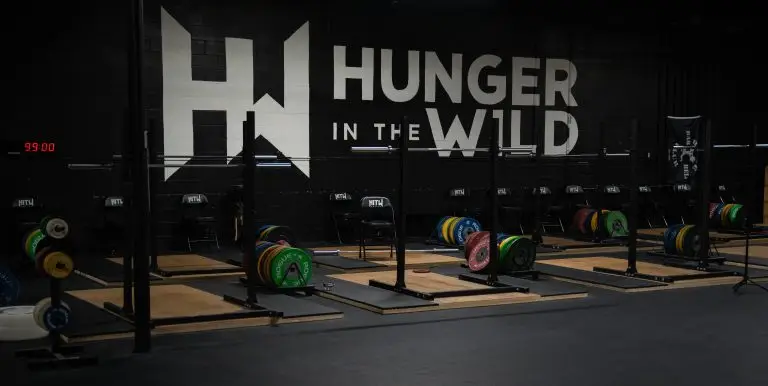
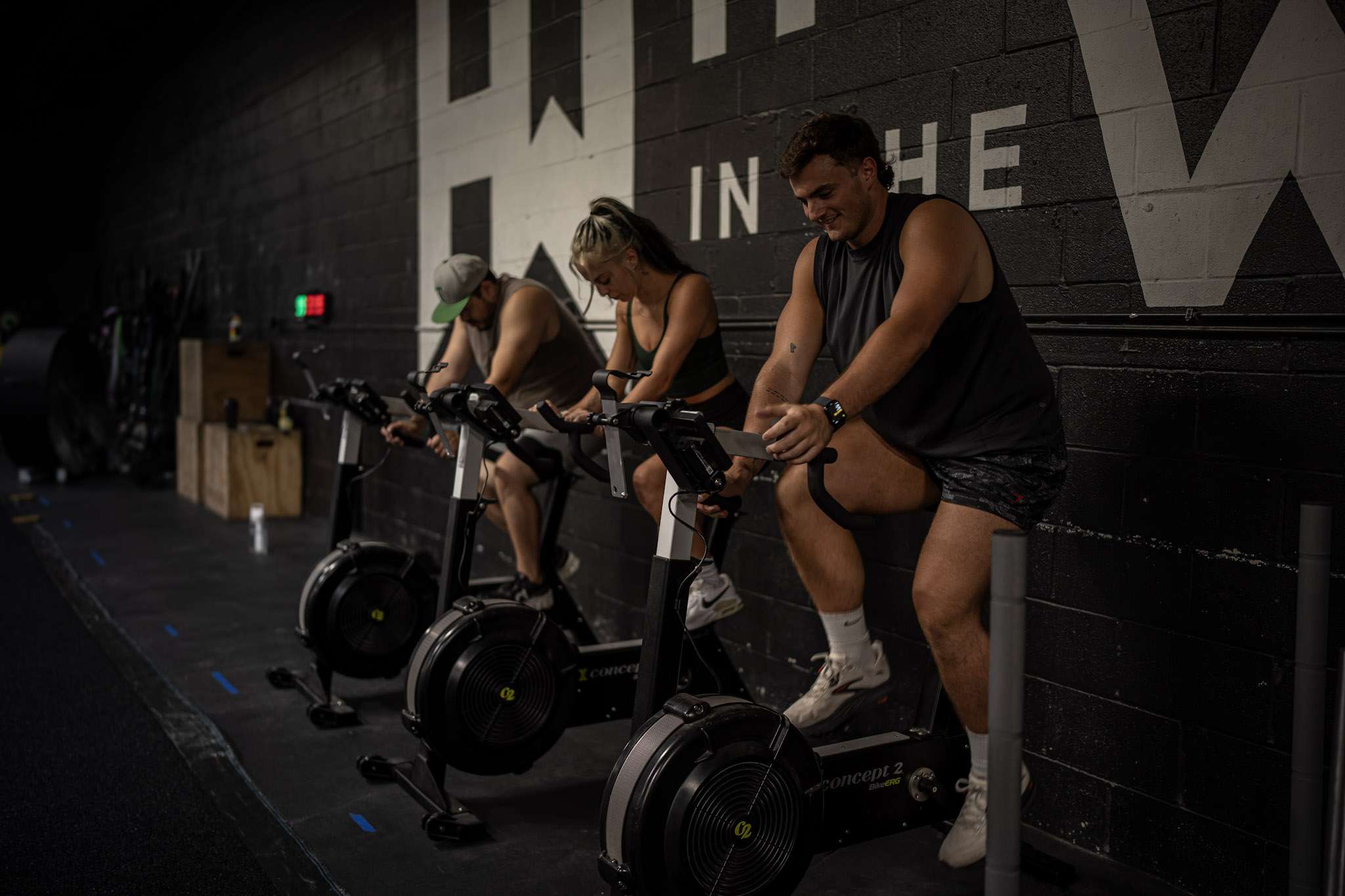
The most effective preparation blends running with functional strength and station-specific work, ideally with coaches who can watch your sled form and build your pacing plan. At Hunger in the Wild, our HYROX classes in Dallas are built around exactly this, with real race equipment and programming that peaks you for race day. If you want to go deeper on the training side, our complete HYROX training guide walks through how to structure your weeks.
Train for your first HYROX race in Dallas
Hunger in the Wild is an official HYROX training club in the Design District with the stations, the coaching, and a community of racers. Come see what race-specific training feels like.
Frequently asked questions
How long does a HYROX race take?
Most first-timers finish in roughly 75 to 110 minutes. Competitive athletes finish closer to 60 minutes, and elite racers go under that. Your time is one continuous clock that runs from the first step to the final wall ball, including every transition in the Roxzone.
Do I need to be really fit to do HYROX?
No. HYROX is designed for everyday athletes, and the Open division weights are manageable for most people who train consistently. What matters most is preparing the mix of running and functional stations, which is very trainable in a few focused months.
Can a complete beginner do HYROX?
Yes. Many people enter their first HYROX with no racing background. Choosing the Open or Doubles division, pacing conservatively, and training the specific stations beforehand makes a first race very achievable.
What should I bring to a HYROX race?
Bring running shoes you have trained in, moisture-wicking clothing, your own water and a small towel, grip chalk if you use it, a bag for the bag drop, and your confirmation and ID for check-in.
Where can I train for HYROX in Dallas?
Hunger in the Wild is an official HYROX training club in the Dallas Design District, with full race equipment, dedicated HYROX classes, and coaches who build your pacing and station strategy. It is one of the most complete places to prepare for a race in the city.
Your first HYROX race is a challenge, not a mystery. Know the format, pick the right division, pace it with patience, and put in a few focused months of the right training, and you will cross that finish line stronger than you expected. When you are ready to start, we will help you get there.