1350 Manufacturing St, Suite 204 · Dallas, TX
Member login: Gym · Online training

Most group fitness classes weren’t built for athletes. They’re built for volume: a big room, a playlist, an instructor calling out moves nobody’s correcting. You leave sweaty, but you don’t leave stronger, and after a few months your numbers haven’t moved. For a serious athlete, that’s not a workout. That’s a treadmill with extra steps.
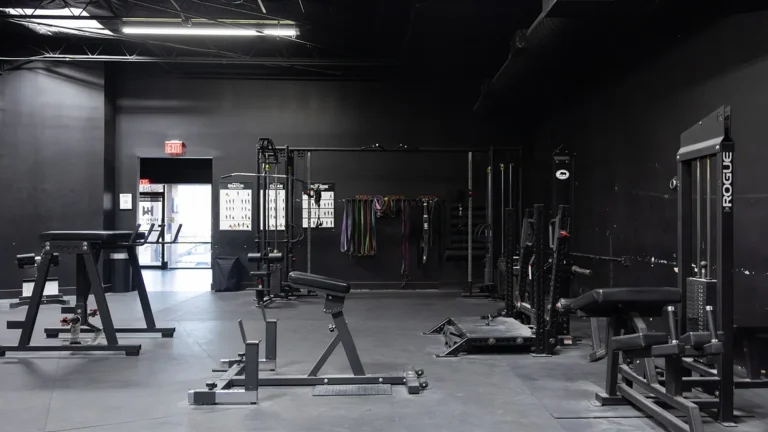
The reason is structure, or the lack of it. Large classes can’t program for your progression or watch your technique, so effort doesn’t translate into adaptation. Small-group strength training solves that by keeping the group small enough for a coach to actually coach. That’s the model behind Hunger in the Wild Gym’s group classes: a coached room where the programming is built to make you measurably stronger, not just tired.
Big-box group classes rarely build real strength because no one is programming your progression or coaching your reps. Small-group strength training keeps the group small enough for individual technique feedback inside a shared session, which is exactly what drives results. Strength is one of the strongest predictors of athletic performance, and supervised, coached training produces both greater gains and far better adherence than training alone. Add the pull of driven training partners around you, and effort climbs on its own. Hunger in the Wild runs coached small-group strength training in the Dallas Design District, built for athletes who want measurable progress rather than a class that just makes them tired.
Athletic performance is built on strength. Research in Sports Medicine shows that stronger athletes sprint faster, jump higher, change direction better, and get hurt less often. That kind of strength doesn’t come from a random circuit. It comes from progressive overload, programmed across weeks, with technique that holds up under load. Standard group classes trade structure for capacity, so serious athletes plateau. If you’ve stopped getting better, the format is usually the problem, not your effort.
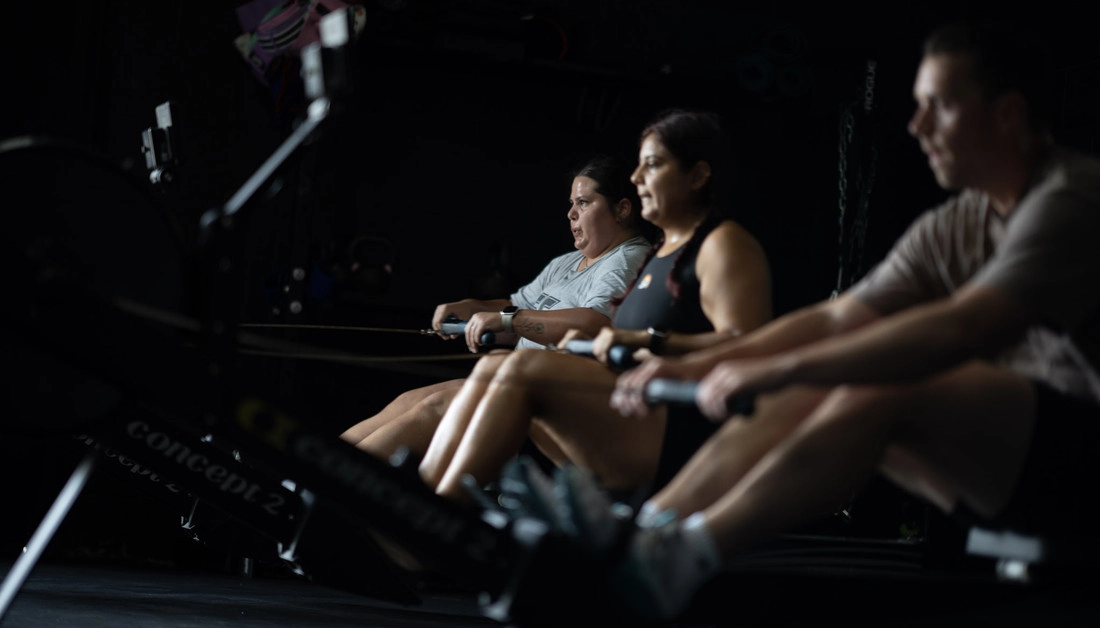
The word “small” is doing real work here. When the group is small, a coach can watch your setup, adjust your load, and cue your technique inside the session—the same feedback loop that makes one-on-one coaching effective. That matters for results: in a 2025 randomized trial published in the Journal of Strength and Conditioning Research, supervised lifters trained with 88% adherence versus 52% for people following a plan on their own, and the supervised group made greater strength and body-composition gains. Coaching isn’t a luxury add-on. It’s the variable that turns a program into progress.
See where you’d fit in the room. Explore our group classes.
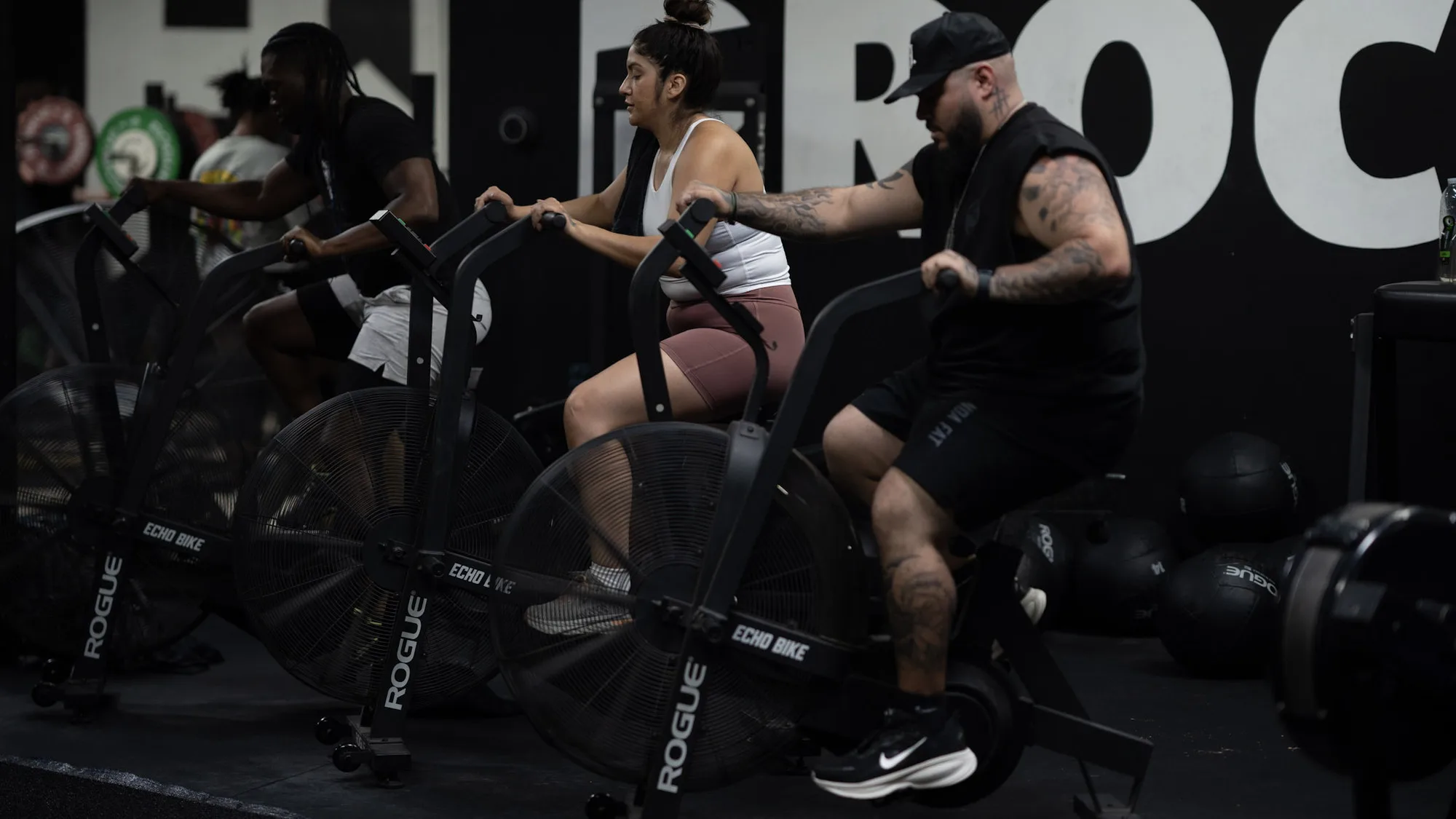
Training alongside other serious athletes changes your output, and that’s measurable. It’s called the Köhler effect: people work noticeably harder when they train with others who keep pace, with some studies showing effort up to 200 percent higher than training alone. A small group gives you that pull without the anonymity of a packed class. You get accountability, a standard to match, and a coach making sure the intensity is productive rather than reckless.
This model fits the athlete or serious adult who wants coaching without a full one-on-one budget, and community without a watered-down class. It suits HYROX competitors building a strength base, lifters who want technique dialed in, and professionals who train hard but need programming they can trust. It’s less suited to someone who only wants a light, social sweat session, and that’s fine. The goal is to get better, and the format that gets you there is the one you need.
Prefer fully individual attention? Our personal training covers that too.
Feature | Big-Box Group Class | Small-Group Strength Training |
Group size | Large and uncapped | Small, coach-to-athlete ratio kept low |
Programming | Generic, same for everyone | Structured, progressive, strength-focused |
Technique coaching | Minimal | Individual cues within the session |
Accountability | Low | High, coach and training partners |
Typical result | Sweat, little strength gain | Measurable strength and performance |
Best for | Casual general fitness | Serious athletes and driven adults |
It’s strength training delivered to a small group by a coach, so you get programmed, progressive lifting with individual technique feedback inside a shared session. It sits between a large class and one-on-one personal training.
For most athletes, it’s close. You keep the coaching, programming, and accountability that drive results, with the added push of training alongside others. Fully individual personal training gives you more customization if you need it.
Serious athletes, HYROX competitors, and driven adults who want real coaching and measurable strength gains, not just a class that makes them tired.
Hunger in the Wild Gym runs coached small-group strength training in the Design District, built specifically for athletes and performance-focused members.
Most athletes see strong results training two to four structured strength sessions per week, programmed around their sport or race calendar. The right number depends on your goals and recovery, which a coach can map for you.
The difference in a coached room shows up in your numbers, and that comes down to who’s building the programming and watching the reps. Small-group strength training gives you the structure of real coaching, the accountability of a set schedule, and the pull of driven athletes next to you, all in one session. It’s the format for people who are done guessing and ready to get measurably better. Hunger in the Wild Gym was founded in 2016 by Kyle Dosterschill, a former top-ranked USA Olympic weightlifter and USAW Level-2 National Coach, and every small-group session reflects that coaching standard.
A free consultation includes a facility tour, a movement assessment, and a straight answer about where you’d start.