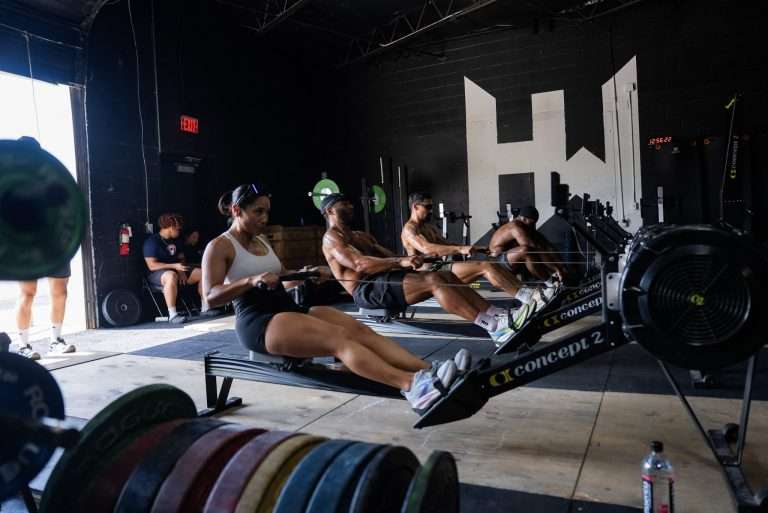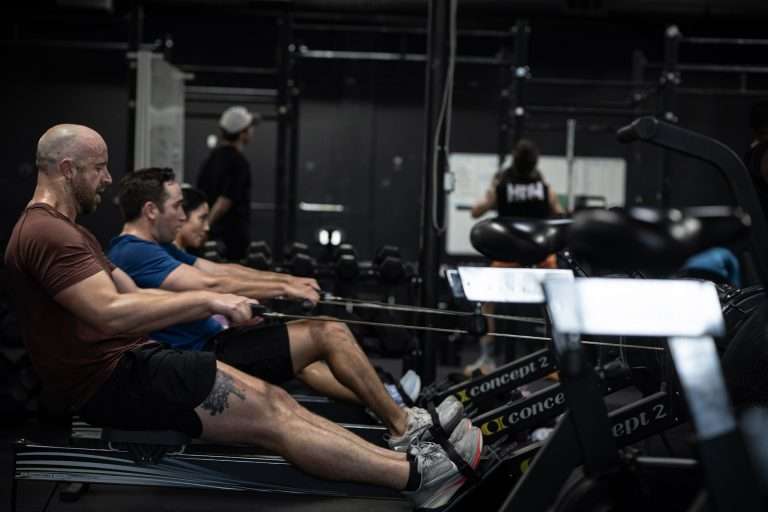

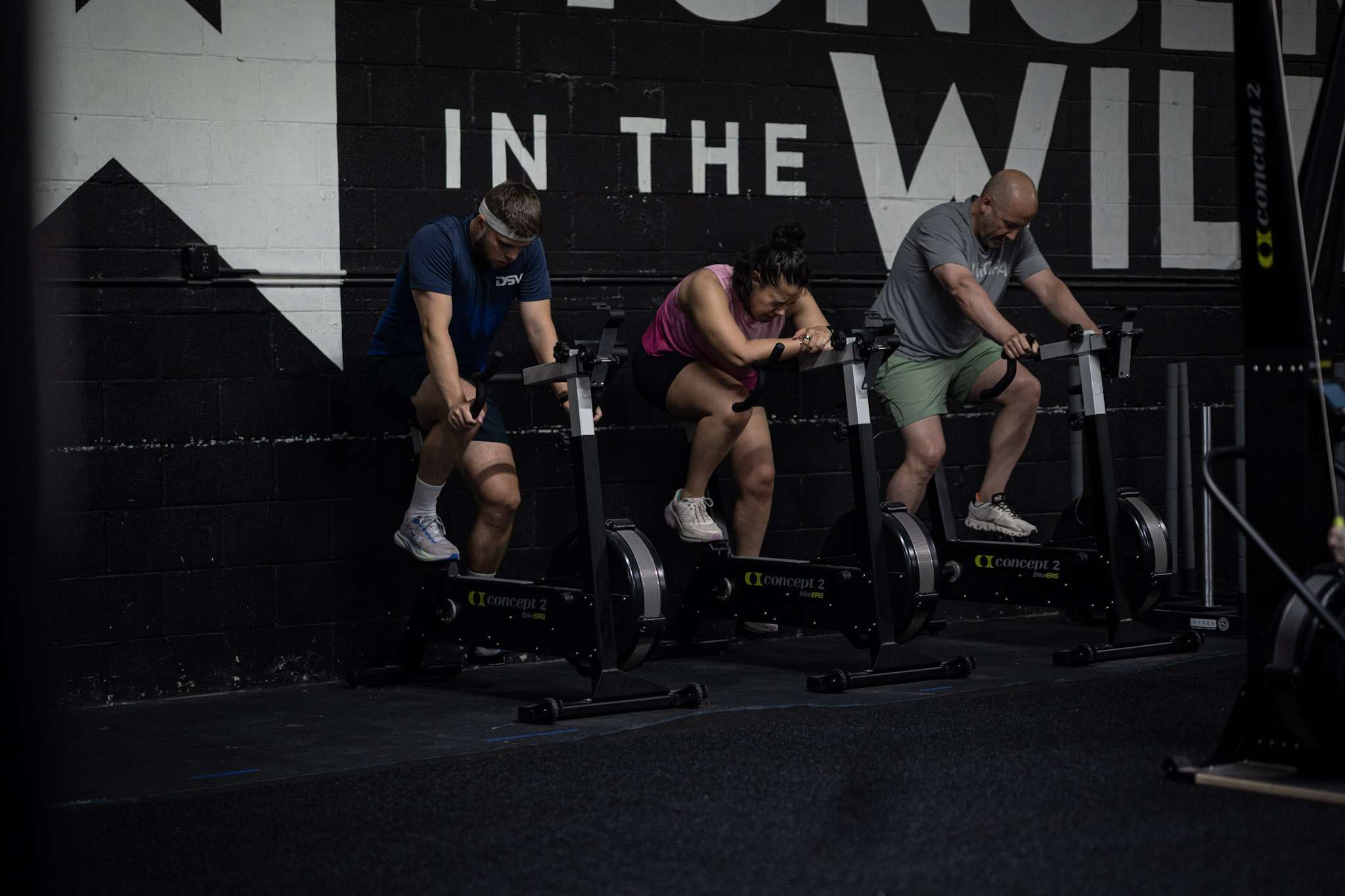
HYROX recovery after a race comes down to three phases. In the first few hours, rehydrate, eat a real meal with protein and carbohydrate, and keep moving gently. For the next one to three days, sleep a lot, expect soreness and keep training easy and short. Over the following one to two weeks, bring back easy running, then lighter strength, then intensity, before you start your next block. That next block should put strength first. In our coaching experience, many recreational athletes feel close to normal within about a week. Your legs, grip and motivation can take longer to catch up, so let how you feel, not the calendar, decide when you train hard again.
HYROX Dallas runs November 18 to 22 at the Kay Bailey Hutchison Convention Center, and plenty of the Hunger in the Wild Gym community is racing it. Whether you’re reading this the night after your heat or a few days later, when stairs still feel personal, this guide is for you. It’s general education from coaches, not medical advice. If something feels wrong rather than just sore, see a doctor.
On paper, HYROX is eight 1 km runs, each followed by a functional workout station: SkiErg, sled push, sled pull, burpee broad jumps, rowing, farmers carry, sandbag lunges and wall balls. In practice, it’s a long, near-maximal effort that hits your heart, lungs, legs, grip and upper body all at once.
A 2025 study in Frontiers in Physiology put 11 recreational HYROX athletes through a simulated Open race. Their median finish was 86.5 minutes, and they spent most of it at “very hard” intensity (median 79.5% of the race) or “hard” intensity (19.6%). Blood lactate peaked higher during the stations than during the runs, and the highest heart rate, lactate and perceived effort all came at the last station, wall balls. It’s a small study of a simulated race, but it matches what we see as coaches.
Then there’s the muscle damage. A review of delayed onset muscle soreness (DOMS) in Sports Medicine notes that eccentric work, where a muscle lengthens under load, causes micro-injury more often and more severely than other muscle actions. It also notes that DOMS can temporarily reduce range of motion, shock absorption and peak force. Think about what 100 m of sandbag lunges and 100 wall ball squats ask of your quads, and the stiff walk down the convention center stairs makes sense.
The takeaway: plan your recovery the way you planned your race.
Here’s how we’d coach a typical athlete through the weeks after a race. It’s a starting point, not a prescription. Adjust it for your age, your experience, how hard you raced and how you actually feel.
| Phase | What to focus on | Training |
|---|---|---|
| Race day (0 to 6 hours) | Fluids and electrolytes, a real meal with protein and carbohydrate, gentle walking | None beyond a walk |
| Days 1 to 3 | Sleep, regular meals, easy movement, massage or compression if you like them | Walks, easy BikeErg or swim, mobility; nothing hard |
| Days 4 to 7 | Check soreness and energy, then reintroduce running | Short easy runs, light strength, no racing efforts |
| Week 2 | Rebuild rhythm | Normal easy volume, moderate strength, one controlled quality session if you feel good |
| Weeks 3 to 4 | Start the next plan | Gradual return to full training, with strength as the priority |
To make this concrete, here are three made-up athletes. They aren’t real HITW members, and their numbers are illustrations, not results.
We’ll come back to all three below.
The American College of Sports Medicine position stand on exercise and fluid replacement says the goal after exercise is to replace any fluid and electrolyte deficit. Sweat rates vary a lot from person to person, so it recommends individualized plans and notes that you can estimate your sweat loss by weighing yourself before and after exercise.
In plain terms: drink steadily over the next few hours instead of chugging, and get some sodium from food or an electrolyte drink. If you weighed yourself on race morning, step on the scale when you get home. It gives you a rough idea of how far behind you are.
You just burned through a lot of fuel. A joint position statement from the Academy of Nutrition and Dietetics, Dietitians of Canada and the ACSM states that recovery from sport is enhanced by well-chosen nutrition strategies. That doesn’t mean a special shake. It means a proper meal soon after you finish, built around carbohydrate and protein.
For protein, the International Society of Sports Nutrition position stand recommends about 0.25 g of high-quality protein per kg of body weight per meal, or an absolute dose of 20 to 40 g, and an overall daily intake of roughly 1.4 to 2.0 g per kg for most exercising people. A burrito bowl with chicken and rice, eggs and toast, or Greek yogurt with fruit and granola gets you there.
Walk the expo, walk to dinner, walk around the block before bed. You don’t need a cool-down protocol. Light movement simply feels better than sitting stiff for hours, and it’s the easiest habit to keep.

A 2021 expert consensus on sleep and the athlete in the British Journal of Sports Medicine notes that athletes are particularly susceptible to habitual short sleep (under 7 hours a night) and poor sleep quality. It also says a one-size-fits-all target such as 7 to 9 hours is unlikely to be ideal for every athlete. Some people need more, especially after a big physical stress.
Race nights are often bad sleep nights. Adrenaline, late heats, caffeine and sore legs all get in the way. One rough night isn’t a problem. Prioritize the next two or three: go to bed earlier than usual, keep the room cool and dark, and nap if your schedule allows.
The same DOMS review found that exercise is the most effective way to ease soreness while you’re doing it, though the relief is temporary. It recommends that athletes who train daily reduce intensity and duration for one to two days after intense, soreness-inducing exercise, or train less affected body parts instead.
So for days 1 to 3, good options include:
What to skip: running intervals, heavy lower-body lifting, wall ball “tests” and anything that makes you want to check your splits.
A 2018 meta-analysis of 99 studies in Frontiers in Physiology compared post-exercise recovery techniques. Its findings:
Those effects come from studies of single recovery sessions after many kinds of exercise, not from HYROX specifically. A massage a day or two after the race is a reasonable treat, and compression tights on the drive home are fine. Neither will undo a bad week of sleep.
Cold water can make sore legs feel better. One caveat: a 2015 study in The Journal of Physiology found that people who used 10 minutes of cold water immersion after strength sessions for 12 weeks gained less strength and muscle mass than people who did active recovery instead.
After a race, when the goal is feeling better rather than building muscle, an ice bath is a reasonable choice. Once you’re back in a strength block, don’t make a cold plunge after every lifting session your default.
Soreness that makes stairs annoying is normal. Some symptoms aren’t. MedlinePlus lists severe exertion as one cause of rhabdomyolysis, a breakdown of muscle tissue. Its symptoms include dark, red or cola-colored urine, decreased urine output, general weakness, muscle stiffness or aching, and muscle tenderness.
If you notice dark or cola-colored urine, aren’t peeing much, or have swelling and weakness out of proportion to normal post-race soreness, get medical care promptly. The same goes for chest pain, fainting, or sharp, localized joint or bone pain that’s getting worse. Don’t wait it out to see if it goes away.
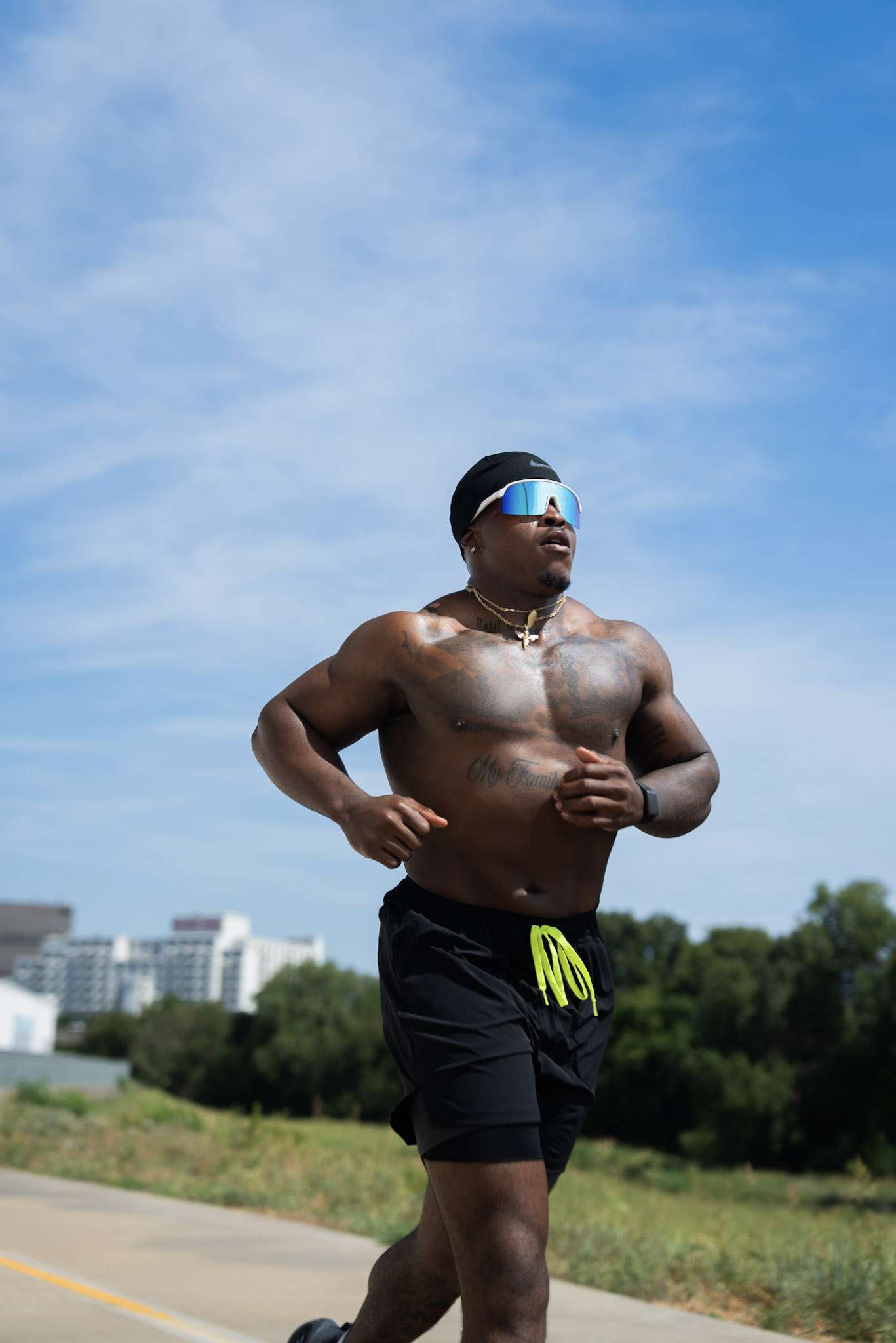
By day 4 or so, many athletes we coach can walk downstairs like a normal person again. That’s usually a good time to try an easy run.
Your first run back should be short, flat and easy: 20 to 30 minutes at a pace where you could chat with a friend. If your stride feels normal and nothing hurts more as you go, great. If you’re limping, changing your stride or getting sharper pain, stop, walk home and give it another day or two. As the DOMS review notes, soreness can change how your muscles fire, and those compensations may increase injury risk if you come back too soon.
Strength work in week one should feel like practice, not a session:
If you’re a strong lifter like our fictional Marcus, the hardest part is resisting the urge to get back under the bar. The race drained your engine and your legs, not your one-rep max.
This is a sample for a healthy recreational athlete who finished tired but OK. It’s not a prescription. Push it back if you’re still very sore, and talk to your coach if anything hurts.
| Day | Example session |
|---|---|
| Race day | Walk, meal, fluids, early night |
| Day 1 | Rest or a 20 to 30 minute walk; mobility |
| Day 2 | Easy BikeErg or swim, 20 to 30 minutes; mobility |
| Day 3 | Walk or easy BikeErg; light upper-body and core |
| Day 4 | Easy run, 20 minutes, if stairs feel normal; otherwise BikeErg |
| Day 5 | Light full-body strength, 2 to 3 sets, nothing near failure |
| Day 6 | Easy run or RowErg, 25 to 30 minutes, conversational |
| Day 7 | Rest or a long walk; write your race review |
In week two, many recreational athletes can get back to a normal amount of easy training. Keep the quality work controlled:
If your easy pace feels unusually hard, your resting heart rate is noticeably higher than normal, or you’re still sleeping badly, give it a few more easy days. Our training and recovery guide shows how to dial back volume, intensity, frequency and duration when stress is high. It works the same way after a race.
Our fictional Priya, the Pro racer, might add her first tempo run in week two. Our fictional Dana might still be keeping everything easy, and that’s fine. Both are recovering the right way.
Once the soreness is gone, sit down with your results and look at where your time actually went. Compare your splits with typical HYROX times by division and age, then look at:
Write down three parts of the race that went well and three to fix. That list is the start of your next training plan.
At Hunger in the Wild, the weeks after a race are when we put strength first. A race season puts a lot of running and station volume through your legs, back and joints, and getting stronger is how we help athletes stay healthy and injury-free through the next build. It also makes the sleds, carries, lunges and wall balls feel lighter the next time you race.
Once you’re back to normal training, that looks like:
Our strength training for HYROX guide explains how we structure it, and our Strength classes are where our members build it.
There’s no single rule for how soon you can race HYROX again. A first-timer like Dana may want a full training block before the next race. An experienced athlete like Priya may race again within a couple of months with a short rebuild and a taper. The more complete your recovery, the better your next block will go.
Whatever you race next, start the block with strength. If you want a target to train toward, our HYROX race predictor gives you a starting estimate. If you’re short on time, the three-day-a-week HYROX plan is a realistic way back in. And if the race showed that your engine is the weak link, keep easy aerobic work going alongside your lifting with our Zone 2 training for HYROX guide.
In our coaching experience, many recreational athletes feel close to normal within about a week and are ready for hard training again after one to two weeks. Soreness usually eases over the first few days. Use how you feel, your sleep and your easy-run pace to decide when to train hard again.
Eat a real meal soon after you finish that includes carbohydrate and protein. The International Society of Sports Nutrition recommends about 20 to 40 g of high-quality protein per meal for most exercising people. Rehydrate steadily and include sodium from food or an electrolyte drink.
Usually not. For the first one to three days, walking, easy cycling, swimming and gentle mobility are better choices. Most athletes can try a short, easy run around day 4 if stairs feel normal and the run doesn’t cause sharper pain.
An ice bath can help sore legs feel better after a race, and research on water immersion shows reductions in soreness and perceived fatigue. Regular cold water immersion after strength sessions may blunt strength and muscle gains, so don’t make it a habit once you’re back in a strength block.
Gentle mobility can make you feel looser, but a 2018 meta-analysis of post-exercise recovery techniques found that stretching did not significantly reduce muscle soreness. Massage, compression garments and active recovery had better evidence.
Bring strength back with light loads and 2 to 3 sets of 8 to 10 reps in the first week, stopping well short of failure. Most athletes can return to moderate loads in week two and normal heavy training in weeks three to four, if soreness and energy have recovered.
There’s no single rule. First-time racers often benefit from a full training block before their next race. Experienced athletes may race again within a couple of months after a short rebuild and taper. Recover fully first, then plan backward from your next race date.
Get medical care promptly if you have dark, red or cola-colored urine, much less urine than usual, swelling or weakness out of proportion to normal soreness, chest pain, fainting, or sharp pain that gets worse. These aren’t normal post-race soreness.
Hunger in the Wild is an official HYROX Training Club in the Dallas Design District. If you want help turning your race review into a plan, our coaches can build your next block around what Dallas showed you, starting with strength.