Strength training for women in Dallas usually stalls for one of two reasons. Either the program is a rotating list of circuits with no progression, or there is no program at all, just a floor full of equipment and a membership card. Both leave you working hard for months without a number that moves.
The fix is not more effort. It is structure, load that increases on a schedule, and a coach who watches your reps and tells you what to change. That is the entire premise behind the coached strength training program at Hunger in the Wild Gym in the Dallas Design District, where sessions are built around a primary lift, planned accessories, and progression you can see on paper.
Women get more measurable return from resistance training than almost any other form of exercise, and the research on mortality, bone density, and muscle retention has gotten stronger in the last two years. The problem is rarely motivation. It is programming. A real strength program runs on progressive overload, a primary lift each session, planned accessory work, and coaching that corrects position before it becomes an injury. If you are choosing between a big-box membership and coached strength training classes for women in Dallas, the deciding factor is whether anyone is tracking your progression besides you.
A 2024 study in the Journal of the American College of Cardiology followed more than 412,000 adults and found that women reach the same mortality benefit from exercise as men on substantially less volume. Women hit an 18% reduction in death risk at 140 minutes of moderate activity per week, while men needed roughly 300 minutes for the same result.
The strength-specific finding is the one worth reading twice. According to the National Institutes of Health summary of that data, women who did regular strength-based exercise saw a 19% lower risk of death compared with 11% for men, and a 30% lower risk of cardiovascular death compared with 11% for men.
Muscle loss makes the case more urgent. UCLA Health reports that adults lose roughly 3% to 8% of muscle mass per decade between ages 30 and 50, and that the rate climbs to 5% to 10% per decade after 50. Falling estrogen accelerates the process for women and slows repair and recovery alongside it.
Bone density follows the same pattern. A 2025 network meta-analysis of 49 studies covering 3,360 postmenopausal women, published in Scientific Reports, ranked combined aerobic and resistance training first for bone mineral density at both the lumbar spine and the femoral neck in postmenopausal women, with resistance training on its own ranking third at both sites.
Despite all of that, only 20.4% of women met both the aerobic and muscle-strengthening guidelines in the CDC National Center for Health Statistics data brief covering 2020, compared with 28.3% of men. The guideline itself is modest: muscle-strengthening work at moderate or greater intensity, hitting all major muscle groups, on two or more days per week.
Find out where your training actually stands A consultation includes a movement assessment and a straight answer about what your program is missing. Schedule a free consultation and facility tour.
 What a Coached Strength Session Actually Contains
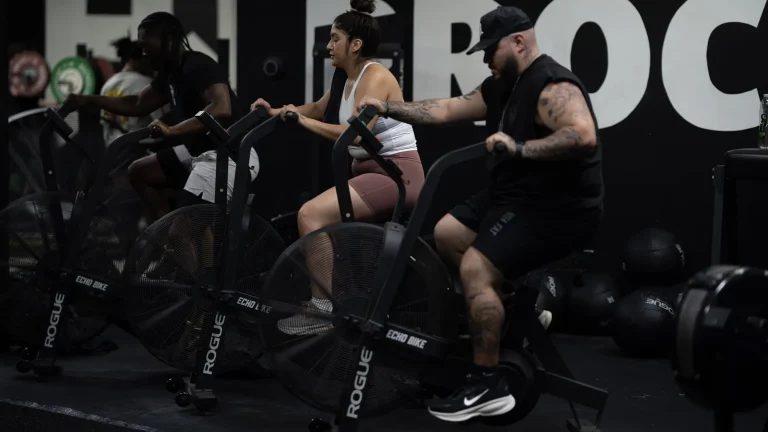
Group strength at Hunger in the Wild runs Monday, Tuesday, Thursday, and Friday at 5:30 AM, 6:30 AM, 12:00 PM, and 5:30 PM. Every session follows the same architecture, and the architecture is the point.
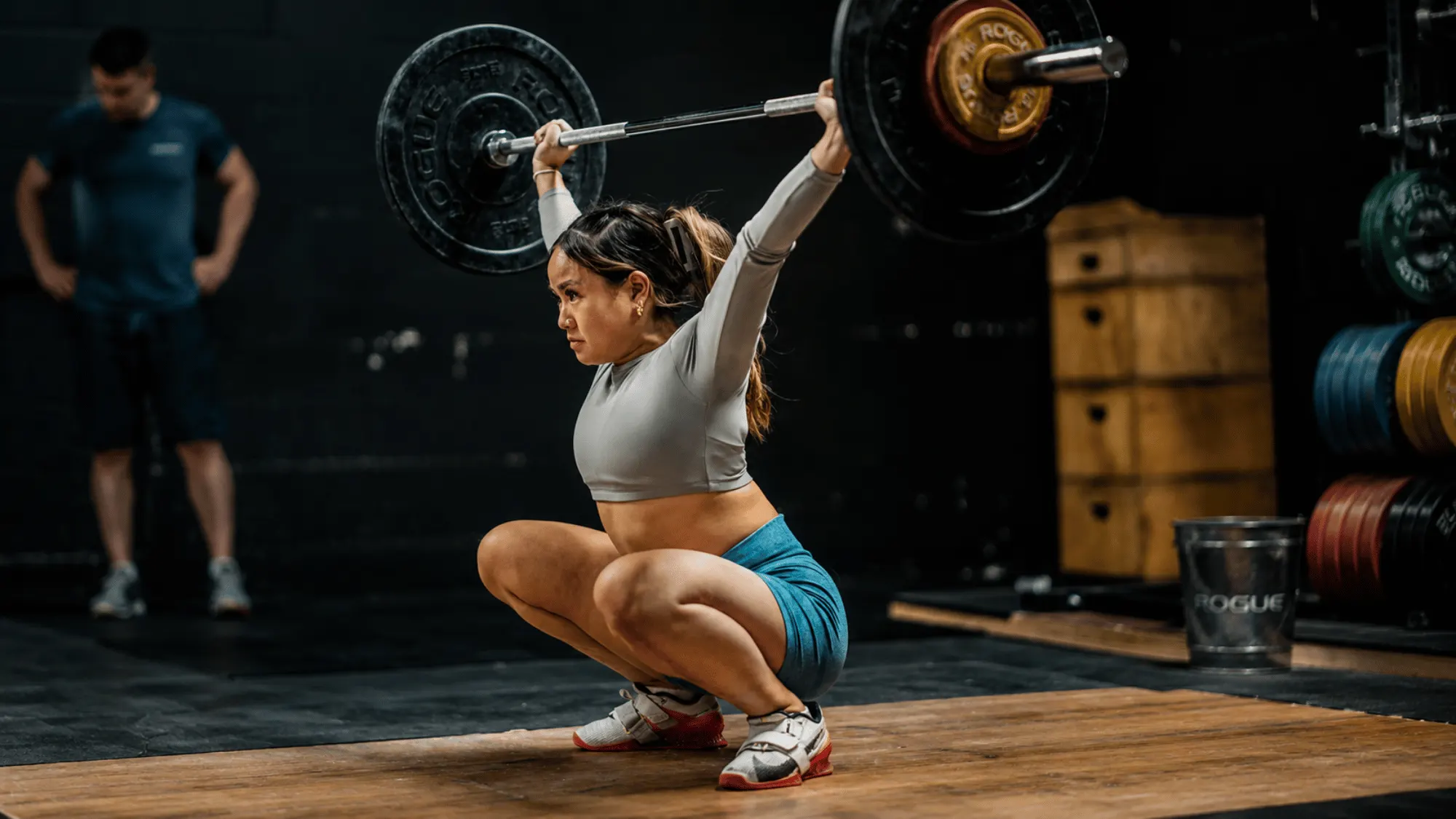
Each session is built around one main movement: back squat, bench press, deadlift, or overhead press. Load is assigned as a percentage of your working max, not chosen by feel on the day. The 2026 ACSM resistance training guidelines, the first substantial update in 17 years, recommend heavier loads near 80% of one-rep max across 2 to 3 sets per exercise when strength is the goal.
Accessories are selected to balance the primary lift, not to fill time. Rows offset pressing volume, hinge variations support the deadlift, and single-leg work corrects the side you favor without noticing. ACSM’s updated guidance puts roughly 10 sets per muscle group per week as the target when muscle growth is part of the goal.
The part you cannot replicate alone is a coach standing three feet away, watching your hip shift at the bottom of a squat and cueing it before rep four. Class sizes stay small so coaches can give that feedback every session, which is why members get corrected on position long before it turns into a nagging knee. You can see the full staff on the meet the coaches page.
These come up in nearly every consultation, and each one costs women years of progress.
Train under a coach instead of guessing Strength classes run four times a day on Monday, Tuesday, Thursday, and Friday, with programming that progresses on a cycle. Explore the strength program.
 Strength Training Classes for Women vs a Big-Box Membership
Both options cost money every month. Only one of them assigns you a plan. Here is the honest comparison for a woman in Dallas deciding where to train.
What you are comparing | Coached small-group strength | Big-box membership |
Programming | Written in cycles: hypertrophy, strength, intensity phases | You write it, or an app does |
Load selection | Percentage of your tested max, adjusted weekly | Whatever felt right last time |
Technique feedback | Every session, every rep that needs it | None unless you buy personal training |
Accountability | A coach notices when you miss two weeks | Nobody notices |
Equipment access at peak hours | Session structure guarantees a rack | Wait for a rack at 5:30 PM |
Cost structure | One membership covers coaching and open gym | Membership plus per-session training fees |
The comparison is not about intensity. Plenty of women train hard at a big-box gym. It is about whether anyone is measuring the result and adjusting the plan when the number stops moving. If you want to go deeper on what a coached class session includes, the guide to group strength training classes walks through a full week.
The first three weeks are technical. You test working maxes, learn bracing and bar path, and usually feel like the weight is too light. That is intentional. Loading a flawed squat pattern is how people end up managing a hip for a year.
Weeks four through eight are where the numbers move. Early strength gains come largely from neural adaptation rather than new muscle, which is why squat and deadlift loads tend to climb faster in this window than body composition changes. Grocery bags, stairs, and carrying a toddler on one hip all get noticeably easier before the mirror does anything.
Weeks nine through twelve are where the program earns its keep. Progression slows, the coach adjusts volume and intensity instead of adding weight blindly, and you learn what a training cycle actually feels like from start to finish. That is the difference between a workout habit and a training age.
See the schedule before you commit Classes run at 5:30 AM, 6:30 AM, 12:00 PM, and 5:30 PM on Monday, Tuesday, Thursday, and Friday. Check the current class schedule.
Strength training for women in Dallas isn’t complicated, but it is specific. You need a primary lift each session, load assigned from a real number, accessory work chosen for balance, and someone qualified watching the reps. Everything else is decoration. The research on mortality, bone density, and muscle retention gives women more reason to train heavy than almost any other population, and less reason to spend another six months on circuits that never progress.
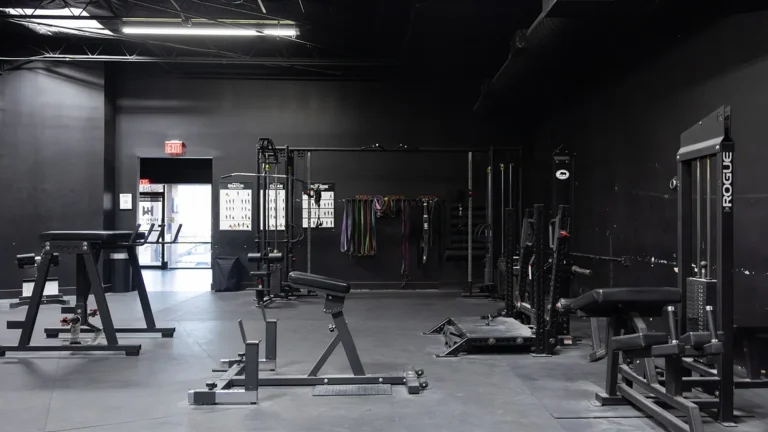
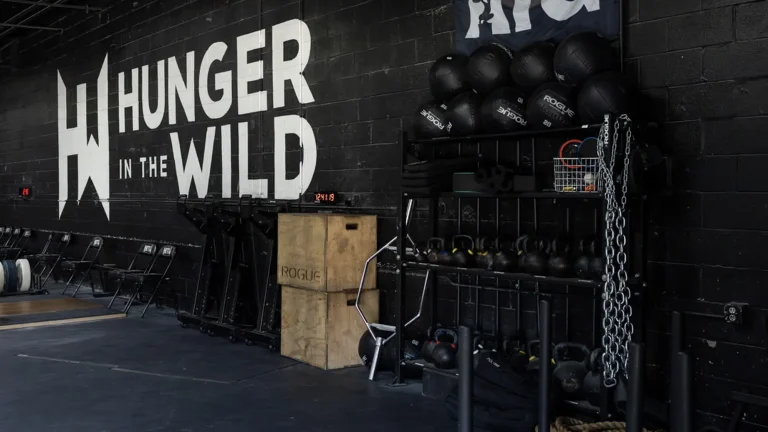
Hunger in the Wild was founded in 2016 by Kyle Dosterschill, a USAW Level-2 National Coach, on the premise that coaching quality is the product. Classes stay small so coaches can teach position rather than count reps, and programming runs in cycles so progress is something you can point to rather than something you hope for. The coaching staff includes women, and the strength floor in the Design District is not the kind of room where you have to justify being in it.
If you want a coached path instead of guesswork, start with a conversation. Tour the facility, meet a coach, and get an honest read on where your training stands.
Talk to a coach before you commit
A free consultation includes a facility tour, a movement assessment, and a program recommendation based on what you are actually training for. Book your free consultation.