You know you should be strength training. You have heard the benefits a hundred times — stronger bones, more muscle, better metabolism, longer life. But knowing you should do something and actually knowing how to start are two very different things.
Most beginners either wander into a gym with no plan, copy exercises from social media, or overthink the whole thing until they never start at all. None of those approaches work.
As a strength coach with over 20 years of experience — including training competitive Olympic weightlifters, NCAA athletes, and hundreds of everyday people who had never touched a barbell — I can tell you that how to start strength training is simpler than the internet makes it seem. You just need the right framework.
This guide covers everything a true beginner needs to know to start strength training safely, effectively, and with a plan that actually leads somewhere.
Strength training is the practice of using external resistance to challenge your muscles, forcing them to adapt and get stronger over time. That resistance can come from barbells, dumbbells, kettlebells, machines, resistance bands, or even your own bodyweight.
The key word is progressive. Strength training is not just exercising with weights. It is a structured approach where you gradually increase the demand on your muscles — more weight, more reps, or more difficulty — so they keep adapting. Without progression, you are just moving weight around. With it, you are building strength.
This is what separates strength training from a random gym session. A workout makes you tired. A strength program makes you stronger.
The benefits of strength training go far beyond looking better. The research is overwhelming at this point, and the list keeps growing.
You build and maintain muscle. Adults begin losing muscle mass as early as their 30s. Strength training is the only reliable way to slow, stop, and reverse that process. More muscle means a higher metabolism, easier daily movement, and better quality of life as you age.
Your bones get stronger. Resistance training increases bone density, which directly reduces your risk of fractures and osteoporosis. This matters at every age, but especially if you are over 40.
You move better and hurt less. Strength training strengthens the muscles around your joints, improves mobility, and reduces chronic pain. Most people who start a consistent program report that their knees, back, and shoulders feel better within weeks — not worse.
Your mental health improves. The evidence linking strength training to reduced anxiety, depression, and improved sleep is strong and growing. The effect is not subtle. Many of our members describe it as one of the most significant changes they experience.
You live longer. Multiple large-scale studies have linked regular resistance training to lower rates of cardiovascular disease, cancer, and all-cause mortality. Strength is one of the strongest predictors of longevity.
If there were a pill that did all of this, everyone on earth would take it. Strength training is that pill.
Compound movements are exercises that work multiple muscle groups at the same time. They give you the most return on your time and effort, and they are the foundation of every good strength program.
As a beginner, you need five movement patterns:
Squat — trains your quads, glutes, and core. Start with a goblet squat holding a dumbbell or kettlebell at your chest. This teaches you to sit into your hips with an upright torso before you ever put a barbell on your back.
Hinge — trains your hamstrings, glutes, and lower back. A Romanian deadlift with dumbbells is the best starting point. Learn to push your hips back while keeping your spine neutral. This pattern protects your back in everything you do.
Press — trains your chest, shoulders, and triceps. A dumbbell bench press or standing overhead press. Start with dumbbells because they allow each arm to work independently and expose imbalances early.
Pull — trains your back and biceps. Dumbbell rows, cable rows, or lat pulldowns. Your back is the foundation of your posture and upper body strength. Do not neglect it.
Carry — trains your grip, core, and full-body stability. Pick up two heavy dumbbells or kettlebells and walk. Farmer carries are one of the most underrated exercises in the gym, and they transfer directly to real life.
Master these five patterns and you have a complete strength training foundation. Everything else is a variation or accessory. Once these feel automatic, adding transverse-plane exercises — the rotational movements the big five leave out — rounds out real-world core strength and athleticism.
This is the single biggest mistake beginners make. They show up to the gym, do whatever feels right that day, and wonder why they are not getting stronger after three months.
A strength program tells you exactly what to do each session — which exercises, how many sets, how many reps, how much weight, and how much rest. It also tells you how to progress from week to week. Without a program, you have no way to measure whether you are actually improving.
You do not need a complicated program. A simple full-body routine done three days per week with progressive overload built in will produce dramatic results for a beginner. The key is consistency and progression, not complexity.
More is not better when you are starting out. Three days per week on non-consecutive days — Monday, Wednesday, Friday or Tuesday, Thursday, Saturday — gives your muscles time to recover and adapt between sessions.
Each session should last 45 to 60 minutes. If you are spending 90 minutes in the gym as a beginner, you are either resting too long or doing too many exercises. Keep it focused.
Consistency beats intensity at this stage. Three sessions per week, every week, for three months will produce more results than six sessions per week for three weeks followed by burnout and quitting.
Your first few weeks should feel almost easy. That is by design.
Starting light lets you learn proper technique without the pressure of heavy weight. It lets your joints, tendons, and connective tissue adapt gradually — these structures take longer to strengthen than muscles and are where most injuries happen when beginners go too heavy too fast.
A good rule: you should be able to complete all of your prescribed reps with good form and feel like you had two or three reps left in the tank. If your form breaks down on the last rep, the weight is too heavy. If you finish your set and could easily do ten more, it is too light.
Starting light also builds a habit of training with good technique from day one. It is much harder to fix bad movement patterns later than to learn them correctly now.
This is progressive overload — the most important principle in strength training. Your body adapts to the stress you place on it, so you need to increase that stress over time to keep getting stronger.
For beginners, this is simple. Add a small amount of weight each week — 5 pounds on lower body lifts, 2.5 to 5 pounds on upper body lifts. If you completed all your prescribed sets and reps with good form last week, you are ready for a small increase.
This does not last forever. Eventually, weekly progress slows down and you need more advanced programming strategies — at that point, working with a strength-focused personal trainer is the fastest way to keep progressing. But for the first three to six months, linear progression — adding a little weight each session or each week — works exceptionally well. Enjoy it while it lasts. These are the fastest gains you will ever make.
You do not get stronger in the gym. You get stronger when you recover from the gym. Training is the stimulus. Sleep, nutrition, and rest are when the adaptation actually happens.
Sleep is non-negotiable. Seven to nine hours per night. This is when your body releases the majority of its growth hormone and repairs the muscle tissue you broke down during training. If you are sleeping five hours a night, no program on earth will save you.
Protein is the building block of muscle. Most beginners undereat protein by a significant margin. Aim for roughly 0.7 to 1 gram of protein per pound of bodyweight per day. This does not require supplements — whole food sources like chicken, fish, eggs, beef, greek yogurt, and legumes will get you there.
Rest days exist for a reason. Soreness in the first couple of weeks is normal, but if you are still significantly sore from Monday’s workout when Wednesday rolls around, you may need to dial back the intensity. Recovery capacity improves over time, but you have to respect it early on.
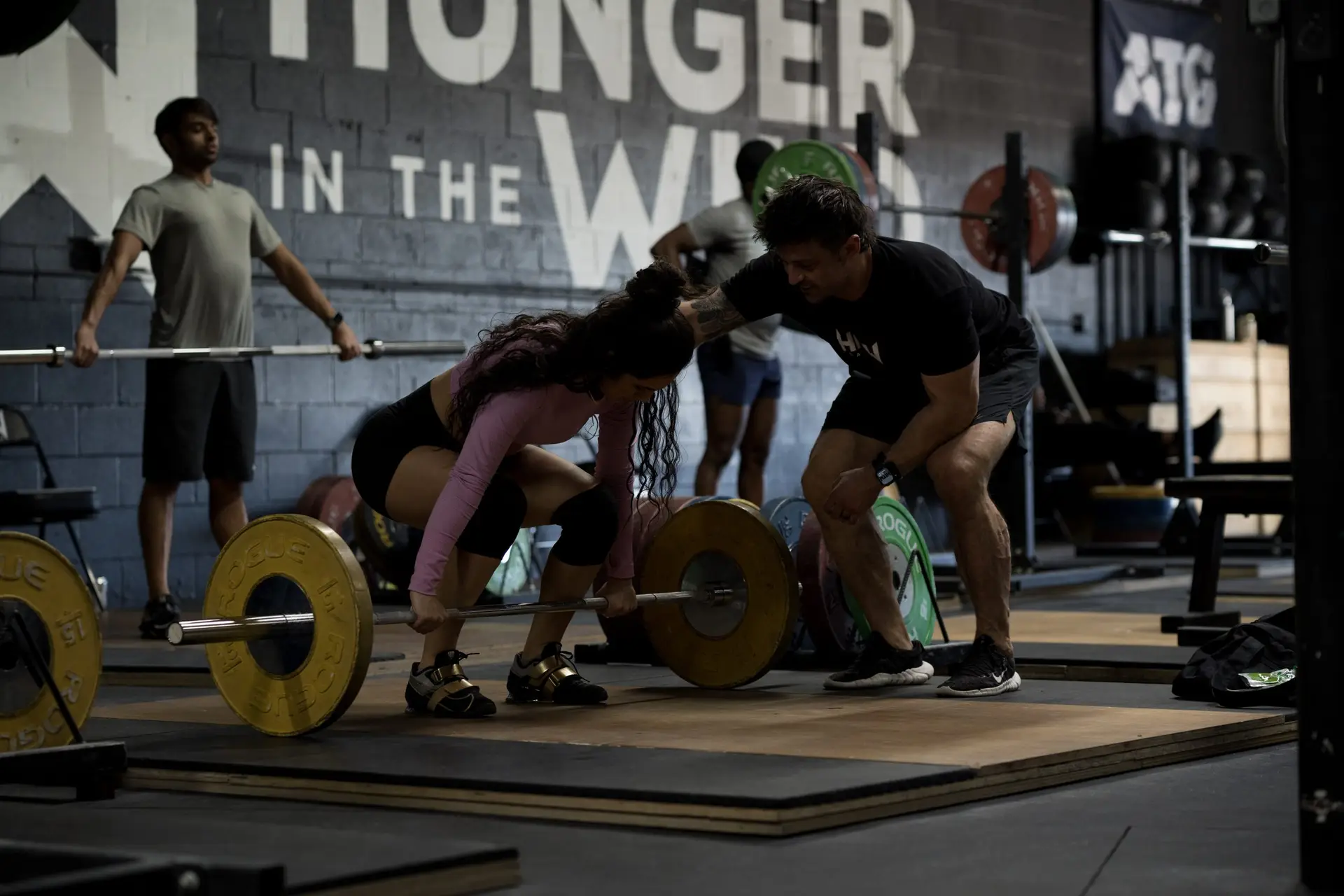
You can learn the basics from a guide like this one, but there is no substitute for a qualified coach watching you move in real time and giving you immediate feedback.
A good coach will teach you proper technique on the foundational lifts, identify mobility limitations that affect your form, build a program around your specific goals and experience level, and keep you progressing safely so you do not stall or get hurt.
This does not mean you need a personal trainer for every session forever. Even a few sessions with a qualified coach at the beginning can set you up with the movement quality and confidence to train effectively on your own or in a group class setting.
When evaluating a coach, look for credentials like NSCA-CSCS, USAW, or a background in competitive strength sports. Experience coaching beginners specifically matters — the best coach for a competitive powerlifter is not always the best coach for someone who has never squatted before.
Doing too much too soon. More exercises, more sets, more weight, more days. Your body needs time to adapt. Start conservatively and build from there. You have your entire life to train.
Program hopping. Switching programs every two weeks because you saw something new online. Pick one program and stick with it for at least 8 to 12 weeks before evaluating whether it is working. Consistency with a mediocre program beats inconsistency with a perfect one.
Avoiding the barbell. Many beginners stay on machines or stick with dumbbells because the barbell feels intimidating. Machines have their place, but the barbell is the most effective tool for building strength. Learn to use it with proper coaching and it will change your trajectory.
Ignoring technique for heavier weight. Adding weight at the expense of form is the fastest path to injury and the slowest path to strength. Technique is not something you master and move past. It is something you refine for as long as you train.
Skipping legs. Your lower body contains the largest muscles in your body. Squats, deadlifts, and lunges are not optional. They are the backbone of any serious strength program and produce the most significant hormonal and metabolic response of any exercises you can do.
Here is a simple framework for your first month. Three days per week, full body each session:
Day A
Goblet Squat — 3 sets of 10
Dumbbell Bench Press — 3 sets of 10
Dumbbell Row — 3 sets of 10 each arm
Farmer Carry — 3 sets of 40 meters
Day B
Romanian Deadlift — 3 sets of 10
Overhead Press — 3 sets of 10
Lat Pulldown — 3 sets of 10
Plank — 3 sets of 30 seconds
Alternate Day A and Day B across your three training days each week. Add weight when you can complete all sets and reps with good form. Rest 90 seconds to 2 minutes between sets.
This is not the only way to structure a beginner program, but it covers all the major movement patterns, is simple enough to follow without confusion, and provides clear opportunities for progression.
After 8 to 12 weeks of consistent training, most beginners are ready for the next phase. Signs you are ready include: your weekly weight increases have slowed or stalled, you have a solid grasp on the foundational movement patterns, you are comfortable in the gym environment, and you want more specificity in your training.
This is where structured programming with periodization becomes important — cycling your training intensity and volume across weeks and months to keep driving progress without burning out. It is also where having a coach or a gym with quality programming makes a significant difference in your long-term results.
If you are interested in how periodization works, we break it down in detail here: Strength Training at Hunger in the Wild.
If you are in the Dallas area and looking for a place to start, the environment you train in matters more than most people realize. A gym with qualified coaching, structured programming, and a culture of accountability will produce dramatically different results than trying to figure it out alone in a commercial gym.
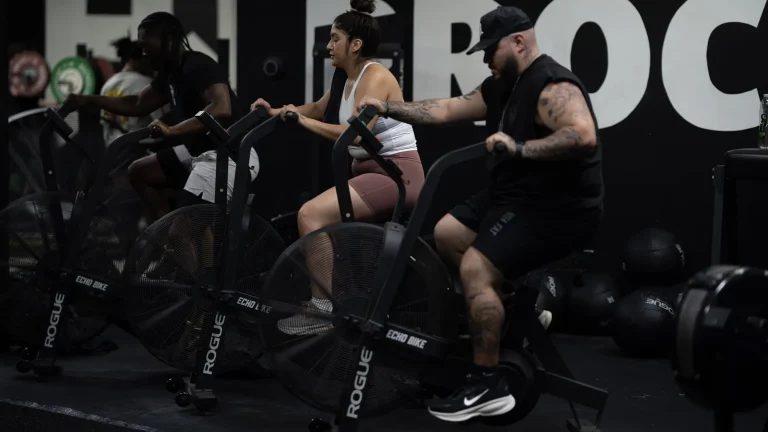
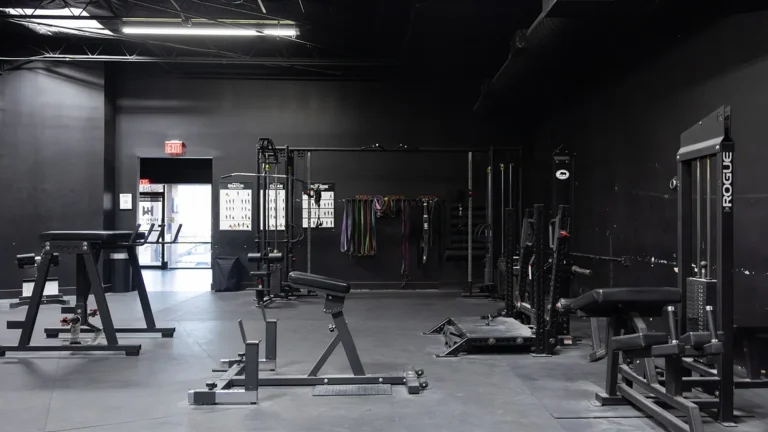
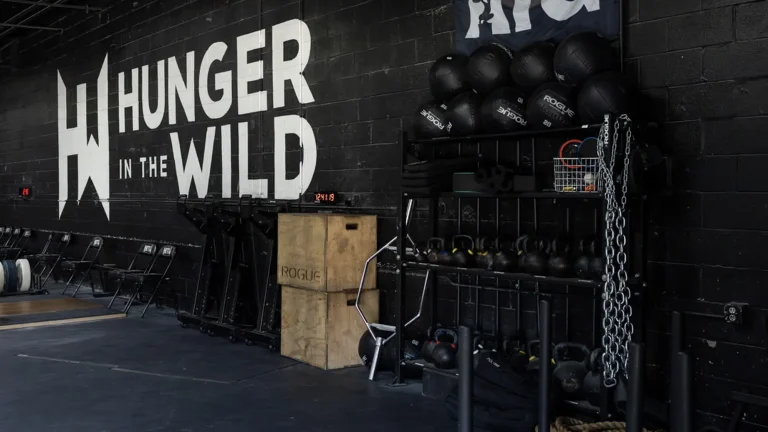
Hunger in the Wild is a strength and performance gym in the Dallas Design District built specifically for this kind of training. Our group strength classes are coached every session, programmed with progressive overload and periodization, and designed for all experience levels — including complete beginners.
We also offer personal training for anyone who wants individualized programming and one-on-one coaching to build their foundation before joining classes.
The hardest part of strength training is starting. Everything after that is just showing up and following the plan.
Book a free consultation and come see the gym. We will talk through your goals, show you the space, and help you figure out the best starting point — no pressure, no commitment, just a conversation.
Ready to start getting stronger?
Book a Free Consultation | View Strength Classes | Explore Personal Training