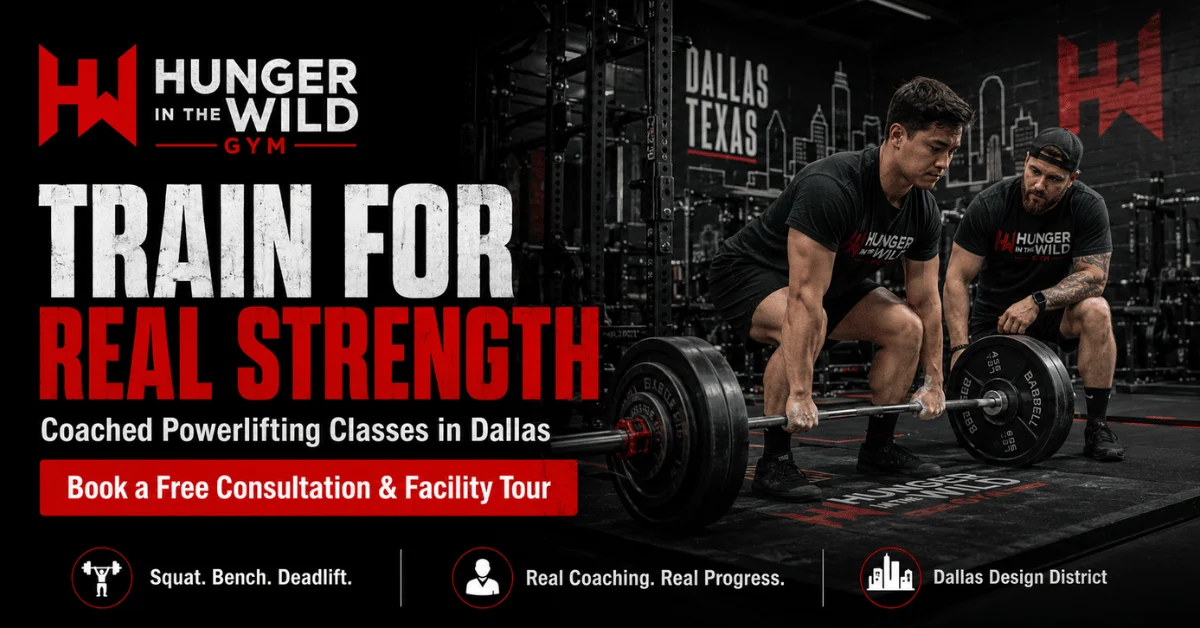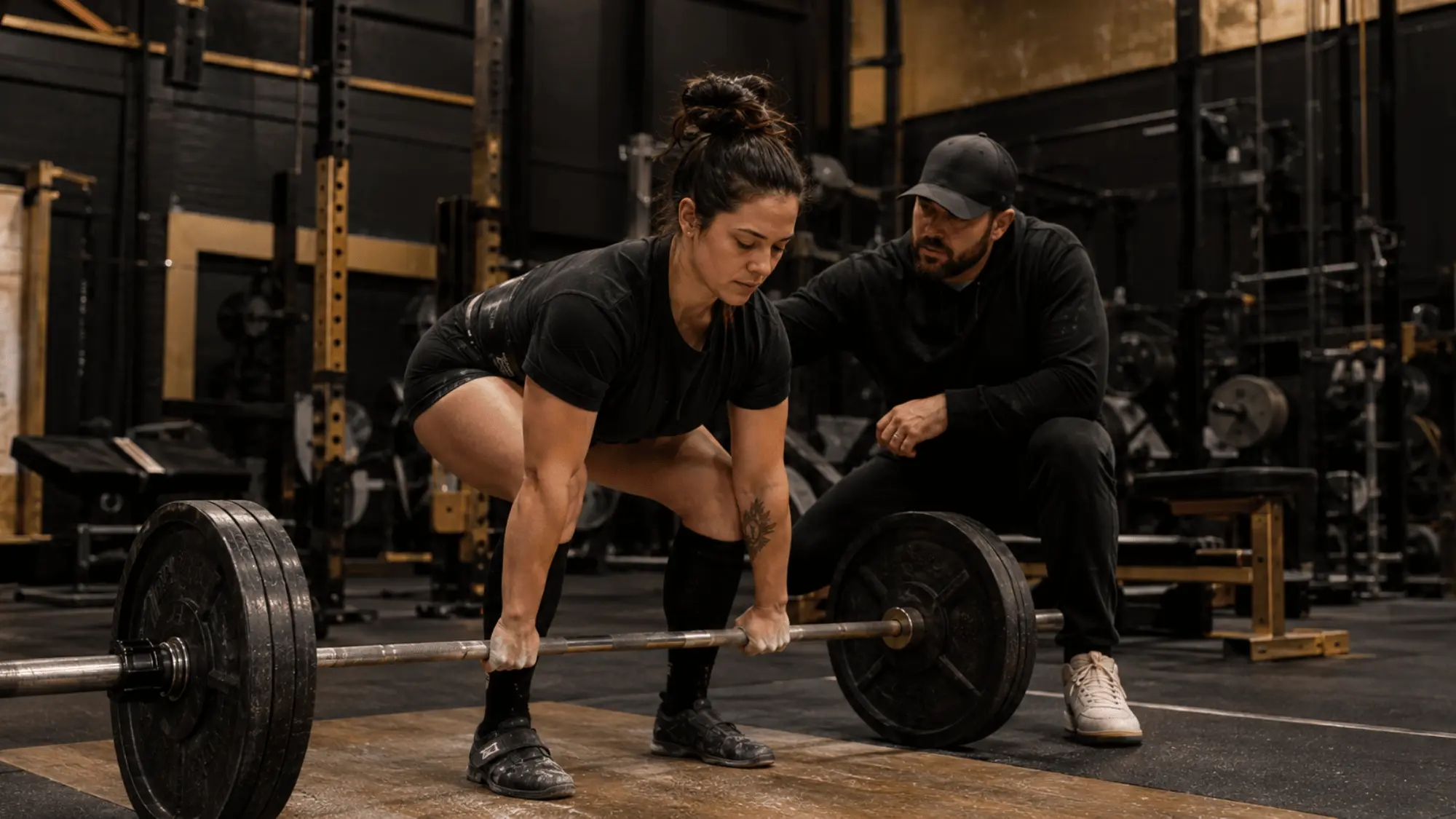
Powerlifting classes in Dallas are coached small-group strength training sessions built around the squat, bench press, and deadlift. The best programs don’t just give you access to racks and platforms. They give you a coach who can watch your lifts, adjust your technique, manage your loading, and help you build strength without guessing. At Hunger in the Wild Gym in the Dallas Design District, adults train these lifts through structured programming that scales from beginner barbell work to competition prep.
You can walk into almost any commercial gym in Dallas and find a squat rack, bench, and deadlift platform. What’s harder to find is someone who can watch your setup, correct your bar path, and explain why your squat keeps stalling. That gap is where most lifters lose progress.
Powerlifting also has a reputation problem. The phrase can sound like it’s only for national-level competitors, max-effort lifts, and intimidating gym floors. In reality, most adults who train this way aren’t trying to win a meet. They want stronger bodies, better coaching, fewer wasted workouts, and a clear plan for progress.
This guide explains what coached powerlifting classes look like, who they’re for, what to look for in a Dallas strength program, and how Hunger in the Wild Gym runs its small-group strength training program in the Design District.
Also Read:
Powerlifting classes are small-group, coached training sessions built around the squat, bench press, and deadlift, with accessory work programmed to support those lifts. They are not just for competitors. The reason coached classes outperform solo training is simple: a coach sees what you cannot see and adjusts technique and load before bad habits compound.
Most Dallas commercial gyms have the equipment but no coaching, which is why progress stalls. Hunger in the Wild Gym in the Dallas Design District runs coached small-group strength classes for adults who want measurable progress without guesswork, with programming that scales from first-time barbell training through competition prep.
Want to see the program in person before you commit? Tour the facility, meet a coach, and get a movement assessment before you sign anything. Book a free consultation and facility tour.
Powerlifting is a barbell sport organized around three lifts: the squat, the bench press, and the deadlift. The total of your best successful attempt at each lift is your competition score, and federations like USA Powerlifting and the United States Powerlifting Association publish technical rules that define legal depth, lockout, and lifting commands.
Most people training in a powerlifting style never compete. They use the same programming because it produces measurable strength in a way random gym workouts do not.
A typical coached session is structured, not chaotic. You warm up the patterns you are about to load. You hit a primary lift at a prescribed percentage of your one-rep max for set sets and reps. You move to accessory work that supports the primary lift, then finish with conditioning or mobility. The coach corrects bar path, bracing, and tempo on every working set.
This is the format the American College of Sports Medicine’s 2026 resistance training guidelines point toward for healthy adults, and the format the NSCA’s position statement on resistance training for older adults identifies as the most effective intervention against age-related muscle and strength loss.
The back squat trains the posterior chain, the quads, and bracing through the trunk. In a coached setting, the squat is built from the ground up: stance, bar position, foot pressure, breath and brace, depth, and bar path. A common error in solo training is shifting weight onto the toes during the descent, which loads the knees and dumps the chest. A coach catches that in the first warm-up set, not six months later.
Depth standards in competition require the hip crease to drop below the top of the knee. In a coached program, that same depth becomes the standard for every rep, every set, every week. Consistency is what builds the squat. Without it, every PR attempt is essentially a new lift.
The bench press looks simple and is not. The legal competition bench press requires a stable arch, feet planted, shoulder blades retracted and depressed, a pause on the chest, and a clean lockout. Most uncoached lifters never set up correctly, which is why their bench stalls and their shoulders start hurting around the same time.
Good coaching fixes grip width relative to your arm length, teaches you to engage your lats so the bar tracks correctly, and gets a real pause on the chest into your training reps. That pause separates lifters who hit clean numbers from lifters whose 1RMs disappear the moment they have to actually control the bar.
The deadlift is the lift most likely to be done badly without coaching. The mechanics are unforgiving: a poorly set back, a hip that shoots up too fast, or a bar drifting away from the body turns the lift into a load on the lumbar spine instead of the posterior chain. Research published in the Orthopaedic Journal of Sports Medicine identifies the lumbopelvic region as among the most commonly injured areas in powerlifting, and the deadlift is where most of those issues compound.
In a coached session, the deadlift starts with set-up work: foot position under the bar, hip hinge, lat engagement, brace, and the slow takeout that establishes tension before the bar leaves the floor. The reps that produce strength are not the heaviest. They are the cleanest.
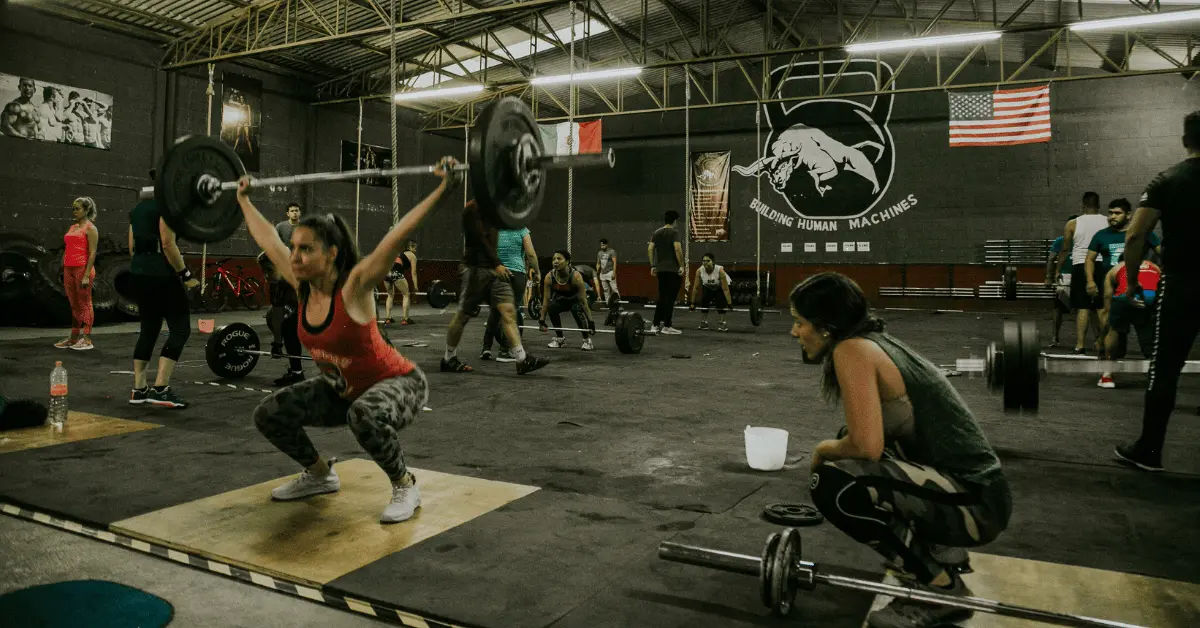
The single biggest predictor of strength progress is not equipment access. It is whether someone qualified is watching you lift. A 2018 cross-sectional study published in the Orthopaedic Journal of Sports Medicine found that injury prevalence among powerlifters runs near 70 percent during a given training period, with the shoulder, lumbopelvic region, and hip taking the brunt. Most of those injuries trace back to chronic technique errors a coach would have caught early.
Coaching also handles the parts of training solo lifters rarely manage well. Periodization, the structured cycling of volume and intensity over weeks and months, requires planning. Most uncoached lifters either train the same lifts in the same rep ranges all year and stop progressing, or chase PRs every session and get hurt.
A coach builds the macrocycle so the work compounds, then adjusts in real time based on what your sets look like that day. At Hunger in the Wild, the strength program is led by coaches who hold national-level credentials and structure each block around a clear training goal: hypertrophy, strength, peaking, or transition. The class is capped so the lead coach knows your last three weeks of training before the warm-up starts.
Strength progress is built on programming, not motivation. If you are tired of guessing at the squat rack, schedule a free consultation with HITW and see what a coached strength program looks like up close. Book a free consultation and facility tour.
The same mistakes repeat in commercial gyms across Dallas. The most common is ego loading: the lifter sees a number on Instagram, adds plates, grinds out an ugly set, and calls it progress. Strength does not respond to ugly reps. It responds to clean reps performed at a prescribed effort over time, and that pattern is almost impossible to enforce on yourself.
The second is random programming. A workout pulled from a forum or YouTube may look productive, but if it does not progress in a planned way, it builds nothing. The third is technique drift: patterns that started clean get sloppier as fatigue builds and weights climb, and by the time the lifter notices, the drift is months old and baked in. A coach who sees you under the bar weekly catches it on day one.
The fourth is skipping the boring work and mismatching expectations. Accessory lifts, mobility, and bracing drills hold the big lifts together, and most solo lifters cut them when time is tight. Coached programs build them in by default and calibrate progression to where you actually are: beginners can add weight weekly, intermediates in cycles, advanced lifters over months.
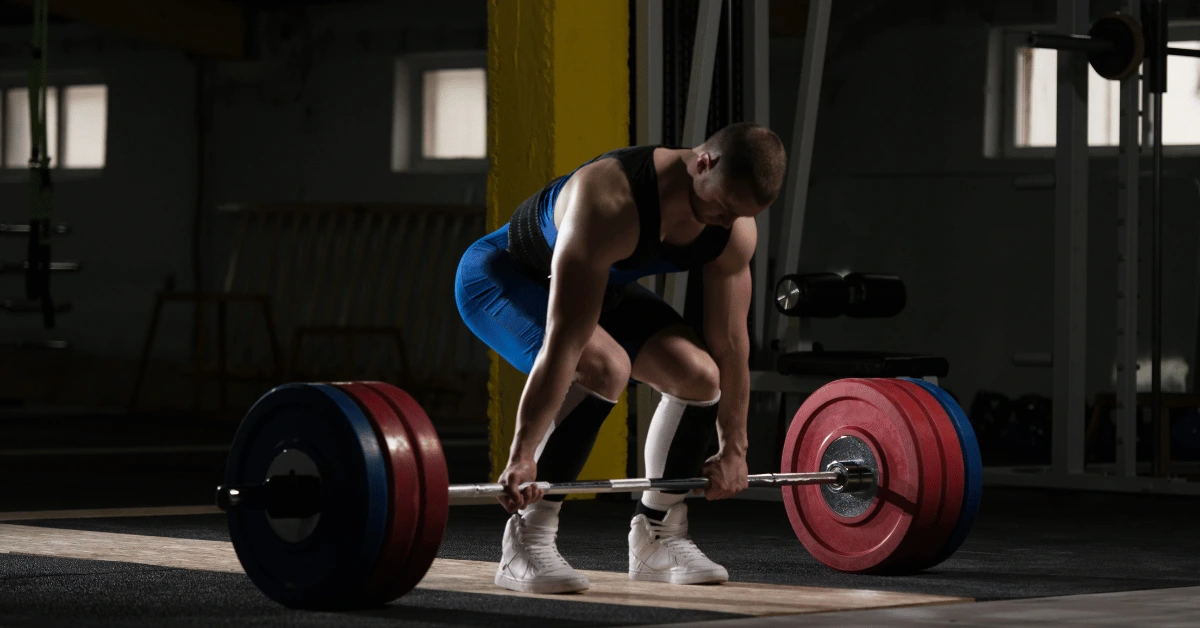
Coached powerlifting classes are for adults who want measurable strength gains and are willing to put in structured work. That fits a wider group than most people assume: professionals who used to play sports and want that capacity back, runners and cyclists who know they need to lift, parents in their thirties and forties who are tired of feeling weaker than they were ten years ago, and general fitness clients who have outgrown machines.
Women are one of the fastest-growing groups in coached strength training and often see the largest early returns. A 2023 systematic review and network meta-analysis published in PMC found that resistance training protocols produce meaningful improvements in bone mineral density in postmenopausal women, with effects that vary by training intensity and skeletal site. Heavy compound lifting, built around the squat, bench press, and deadlift, is exactly the stimulus the research points to.
This also includes people returning after a break. If you lifted in college and have spent the last decade doing classes and treadmills, a coached strength program is the most efficient way back in. You already know how to work, you just need updated programming, current technique cues, and someone watching. What coached strength classes are not for: people who want a 30-minute sweat session and no thinking. Powerlifting requires attention and consistency, and the format rewards both.
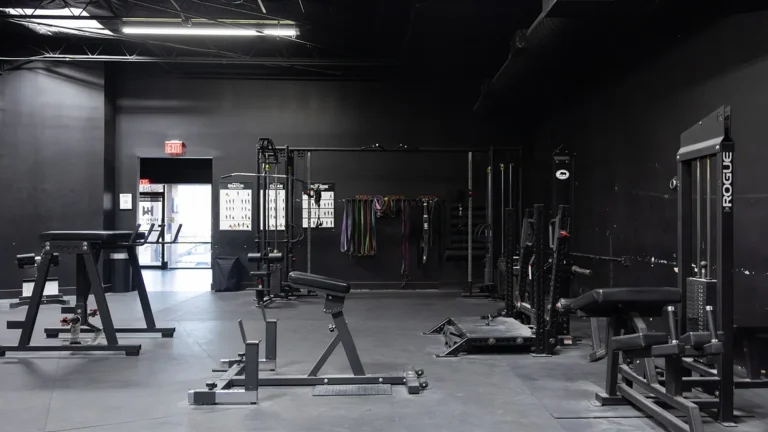
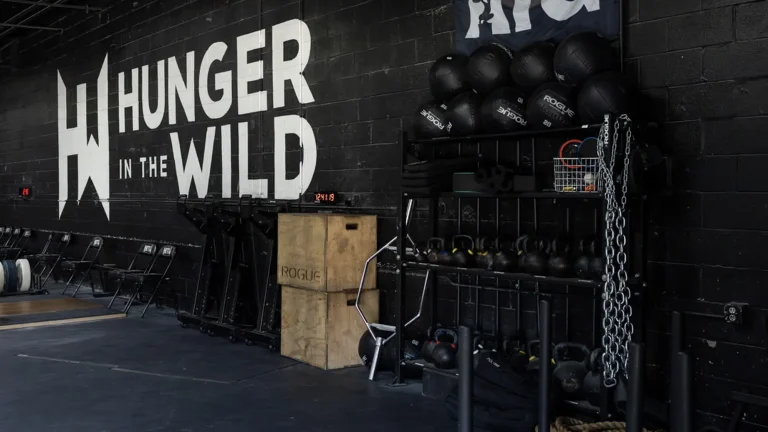
Hunger in the Wild Gym sits in the Dallas Design District at 1350 Manufacturing St. The facility includes a dedicated strength floor with competition-grade racks, calibrated plates, multiple platforms, and the bars used in actual meets. Membership is $220 per 4-week cycle and includes unlimited coached group classes, 24/7 keycard access, and a personalized program through the gym’s training app. Full details are on the membership pricing page.
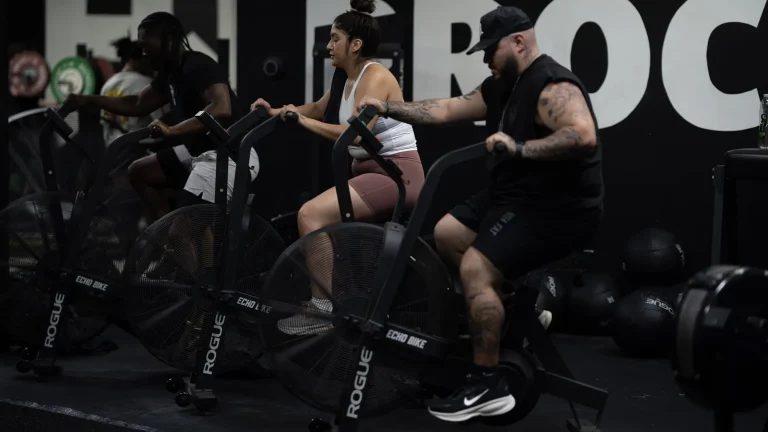
The strength program runs as coached small-group classes, with class sizes set so the lead coach can give individual feedback on every working set. Programming is periodized in blocks. Each member follows the same template, but loading is individualized based on current strength numbers and movement quality. A first-time barbell client and a competing powerlifter can run the same session because percentages and accessory choices adjust to where each lifter actually is.
For members who want a deeper one-on-one path, the personal training program layers private sessions on top of group classes. Athletes who want to also learn the snatch and clean & jerk often cross-train into the Olympic weightlifting program, the only dedicated Olympic lifting program in Dallas, led by founder Kyle Dosterschill, a USAW Level-2 National Coach. Intake is the same for everyone: book a free consultation, walk the facility, meet a coach, and complete a movement assessment. Nothing is sold in that first meeting. The point is fit.
Before you sign up at any Dallas gym offering coached strength training, use this list as a screen.
Strength training is one of the most reliable investments an adult can make in long-term health, capacity, and confidence. The research is unambiguous and the methods are well established. The format that works best for most people is coached small-group training built around the squat, bench press, and deadlift. The problem in Dallas is not access to weights. It is access to coaching that turns those weights into progress.
Hunger in the Wild was founded in 2016 by Kyle Dosterschill to be the kind of gym he wanted to train at: credentialed coaches, structured programming, small classes, and a culture that respects adults who want results without hype. The strength program serves first-time barbell clients, returning lifters, and competitive athletes with the same coaching standard applied to every member.
Ready to see what coached strength training looks like in person? Tour the Design District facility, meet a coach, and get a movement assessment before you decide. Book a free consultation and facility tour.