Fitness coaching in Dallas should change something you can measure: your back squat, your mile split, how your knees feel on the stairs at the end of a long day. If you’ve spent two or three years inside a commercial gym and your numbers look almost identical to your first month, the issue is usually not effort. It’s the absence of a written plan and someone qualified watching you run it.
That gap is exactly what coaching fills. At Hunger in the Wild Gym, a coaching-led facility in the Dallas Design District, one-on-one and small-group personal training is built so that strength work, conditioning, and accountability operate as one system rather than three habits you try to juggle alone. Let’s look at what that actually looks like, what the research says about coaching versus self-directed training, and how to tell whether you have outgrown the do-it-yourself approach.
Real fitness coaching is not a trainer counting your reps. It’s a credentialed coach writing a progressive plan, correcting your technique in real time, and holding you to a schedule so the work compounds instead of resetting every few weeks. The strongest programs put strength, conditioning, and accountability in the same place, because chasing them across separate apps and gyms is where most people stall. In Dallas, a coaching gym like Hunger in the Wild combines those three under one roof, with small classes and coaches who track your progress by name. If your training has plateaued despite consistent effort, coaching is usually the missing variable.
See what coached training looks like in person. Walk the floor, meet a coach, and talk through where your training has stalled. Book a free consultation and facility tour.
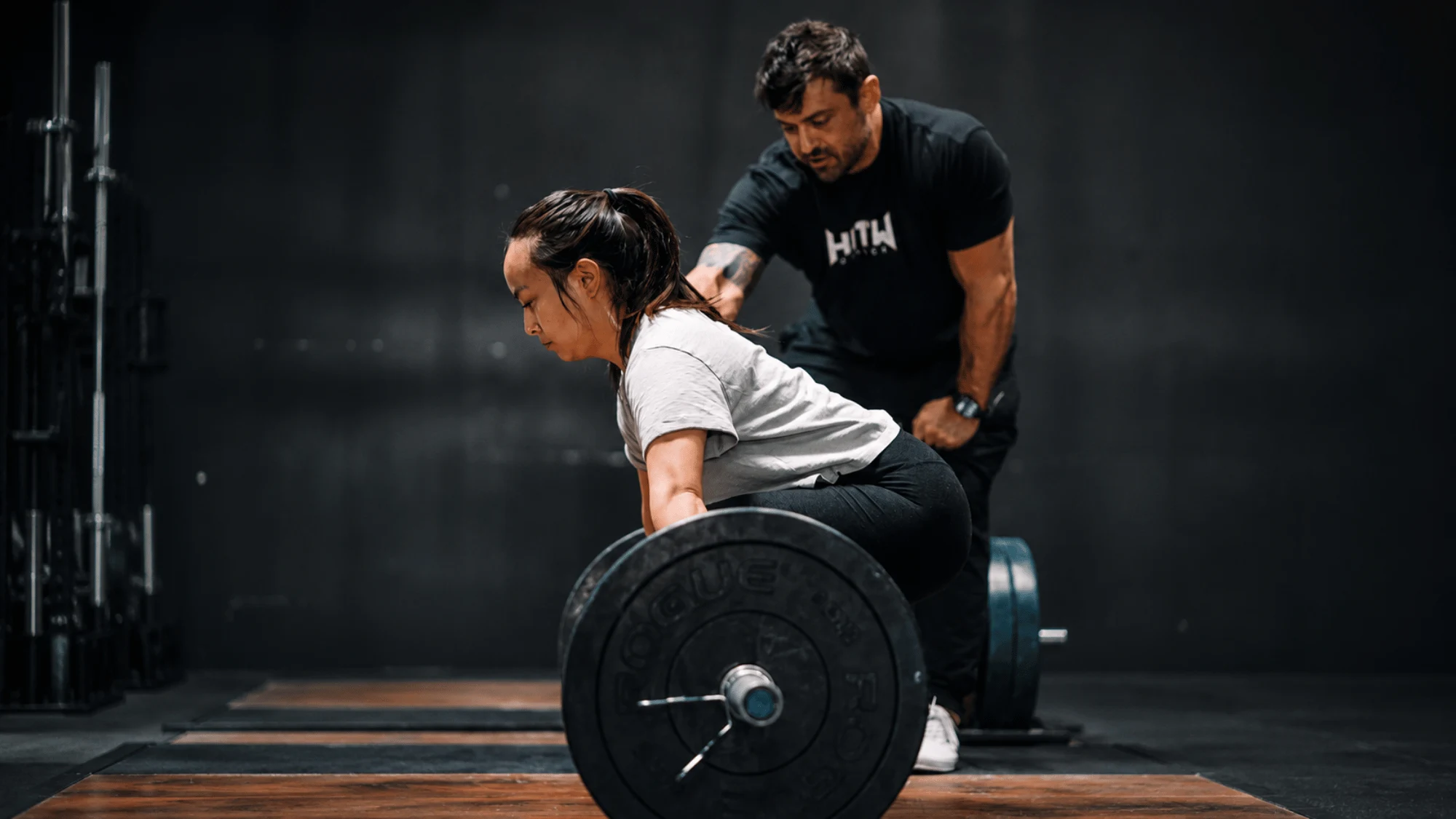
The phrase gets used loosely. A big-box gym sells “personal training” that often means a rotating staffer counting reps off a clipboard. Coaching is a different relationship. A coach assesses how you move, writes a program toward a specific outcome, adjusts loads week to week, and watches your mechanics closely enough to catch the small faults that turn into injuries or plateaus.
The distinction matters because adults are busy and training time is scarce. The current Physical Activity Guidelines for Americans, summarized by the CDC, call for at least 150 minutes of moderate aerobic activity a week plus muscle-strengthening work on two or more days. Most people technically meet the hours and still see nothing change, because volume without progression and feedback does not drive adaptation. A coach is the person who makes those hours actually count.
Good coaching also adapts. Travel, a cranky shoulder, a stressful stretch at work: a coach adjusts the plan around real life instead of letting one rough week unravel a month of progress. That kind of adjustment is hard to make for yourself, because the person writing the program and the person looking for an excuse are the same person.
 Strength, Conditioning, and Accountability Under One Roof
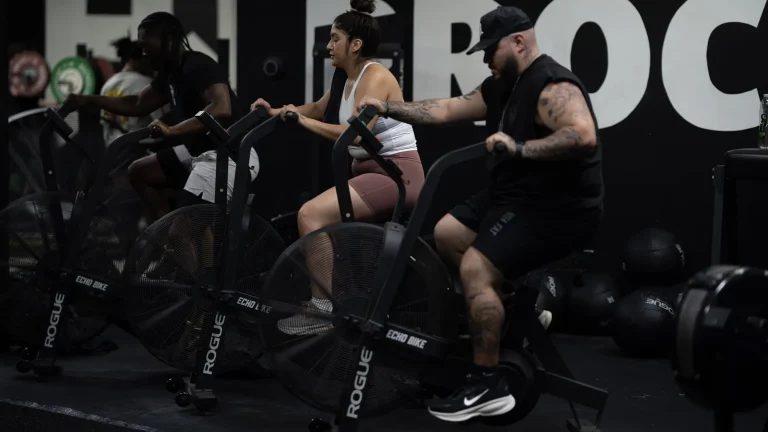
The most common reason Dallas professionals stall is fragmentation. Strength lives in one app, a running plan lives in another, and accountability lives nowhere. A coached gym solves that by treating all three as parts of the same program, which is also what people mean when they search for a Dallas gym that combines strength, conditioning, and accountability.
Strength is the base everything else sits on. The new 2026 ACSM position stand on resistance training, which synthesized 137 systematic reviews covering more than 30,000 participants, concluded that healthy adults should perform progressive resistance training to improve muscle function, size, and physical performance. A 2018 meta-analysis in Sports Medicine similarly tied strength gains mostly to the progressive training volume you accumulate over a week. The word that matters in both is progressive. Lifting the same weights for the same reps is maintenance, not progress, and a coach is the one who keeps nudging the plan forward.
Random cardio burns time and calories but rarely builds the engine that makes daily life easier. Coached conditioning is programmed against a goal: a faster row, a longer effort at the same heart rate, a body that recovers between hard sets. At HITW, conditioning runs as its own track through the engine and endurance program, so it complements the strength work instead of cannibalizing it.
Accountability is the quiet differentiator. It is not a coach texting you guilt trips. It is a scheduled class, a coach who notices when you miss two weeks, and a record of your numbers that makes backsliding obvious. That structure is most of why coached group classes outperform a solo membership for the average person: showing up is no longer a daily negotiation with yourself.
Bring strength and conditioning into one plan If you are tired of stitching together apps and guesswork, a coach can build you one program that fits. Schedule a free consultation and facility tour.
 What the Research Says About Coached Versus Solo Training
There is direct evidence that supervision changes results. A controlled study published in Medicine & Science in Sports & Exercise compared 12 weeks of identical periodized programs, one group directly supervised by a trainer and one training on its own. The supervised group, indexed on PubMed, increased training loads faster and produced significantly greater gains in maximal strength. Same program, better outcome, simply because someone was there to push the load and correct the lift.
The mechanism is not mysterious. A coach loads you appropriately when you would have sandbagged, slows you down when your form is breaking, and keeps the progression honest. That feedback loop is hard to replicate alone, and it is the core of what a good Dallas fitness coach provides session after session.
In practice it looks ordinary. A coach sees your third set of squats slowing and adds a little weight anyway because your bar speed says you have more, or holds the load steady and fixes a knee that is caving instead. Those small in-the-moment calls, repeated across months, are the difference between a program on paper and progress in the logbook.
Coaching is not only for competitive athletes, though HITW trains plenty of those. It fits the professional who used to be fit and wants a structured way back. It fits the lifter who has plateaued and cannot diagnose why. It fits the runner who keeps getting hurt because nothing is building the strength to support the mileage.
It also fits people who simply value their time. Paying for coaching means every session has a purpose written before you arrive, which is the opposite of wandering a gym floor deciding what to do. For most adults balancing a career, that efficiency is worth more than the membership saved by going it alone.
Women starting or returning to structured strength work are a growing part of that group. Coaching removes both the guesswork and the intimidation of a crowded weight room, replacing them with a clear plan and someone accountable for your progress.
Not all coaching is equal, so screen before you sign. Ask which certifications the coaches hold, who actually writes the programming, and how progress gets tracked across a training block. A serious gym answers in specifics rather than slogans.
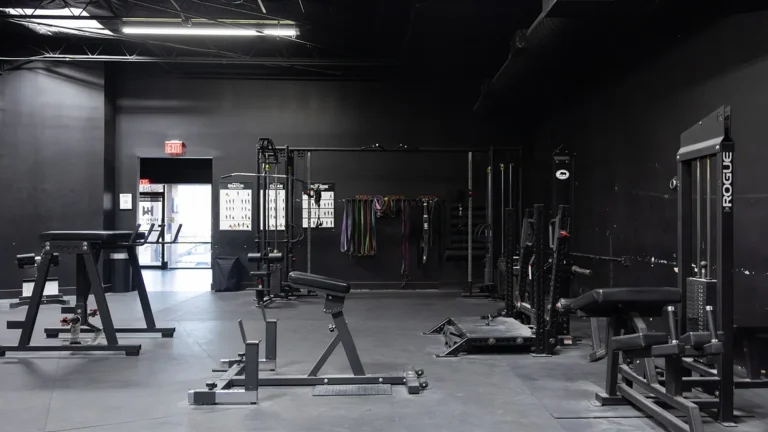
Ask about class size too, because individual feedback is impossible when one coach is running a packed room. The honest test is a visit. A free consultation and a tour will tell you within fifteen minutes whether the coaching is real, whether the floor has the equipment you need, and whether the membership structure fits how often you can train. If a gym pushes you to commit before you have seen a session, that is its own answer.
A quick gut check. If several of these sound familiar, coaching is probably the next step.
None of these mean you are doing anything wrong. They mean you have hit the ceiling of what unstructured training can give you.
Fitness coaching in Dallas earns its place when it does what solo training cannot: write a real plan, correct your movement, and hold the schedule so your effort compounds. Strength, conditioning, and accountability are not three separate projects. In a coached gym they are one program, which is why people who switch from a commercial membership to coaching usually see their numbers move within the first few months.
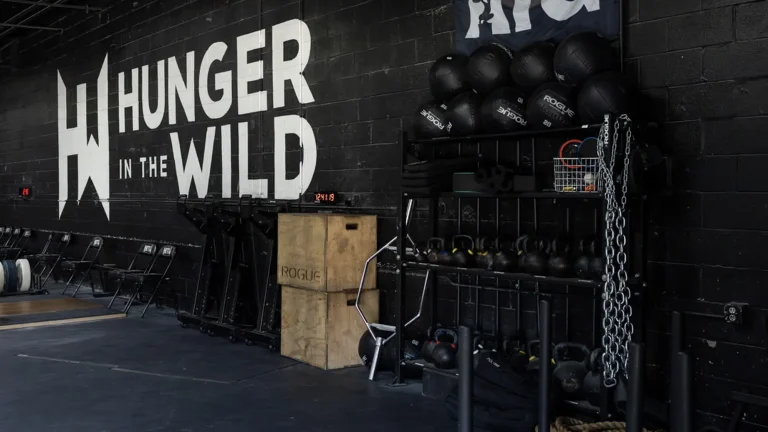
Hunger in the Wild was founded in 2016 by Kyle Dosterschill, a career competitive athlete and USAW Level 2 National Coach. The gym runs coached strength, conditioning, HYROX, and Olympic weightlifting out of a facility in the Design District, with classes capped small enough that coaches know your name and your numbers. If you want a coached path instead of guesswork, the first step is a conversation.
Book a free consultation and facility tour. Talk to a coach, see the floor, and decide from there. Schedule your consultation with Hunger in the Wild.