Muscle building at a Dallas gym usually stalls for one of two reasons. Either you’re running the same routine week after week with weights that stopped challenging you months ago, or you’re jumping between random classes that spike your heart rate but never load the same movement pattern heavily enough or often enough to grow tissue. Both leave you looking the same, lifting the same, and wondering where the last eighteen months went.
The fix is boring on paper and demanding in the room: a periodized strength program, coached loads, and a facility built for barbell work. That’s what Hunger in the Wild Gym’s coached strength training program is built around, and it’s why most members come to us after outgrowing a commercial gym, a boutique studio, or a CrossFit box.
Most Dallas gyms don’t build muscle; they let you work out. Real hypertrophy needs progressive overload, honest load selection, and a coach watching your reps close enough to catch the small technique breakdowns that stall progress. If you’re 30-plus and your lifts haven’t moved in a year, the gym is the reason, not you. Hunger in the Wild programs strength blocks, coaches every session, and tracks the numbers that decide whether muscle actually gets built. The deciding factor when choosing between a big-box membership and a coached strength gym in Dallas is whether anyone is holding you to the plan besides you.
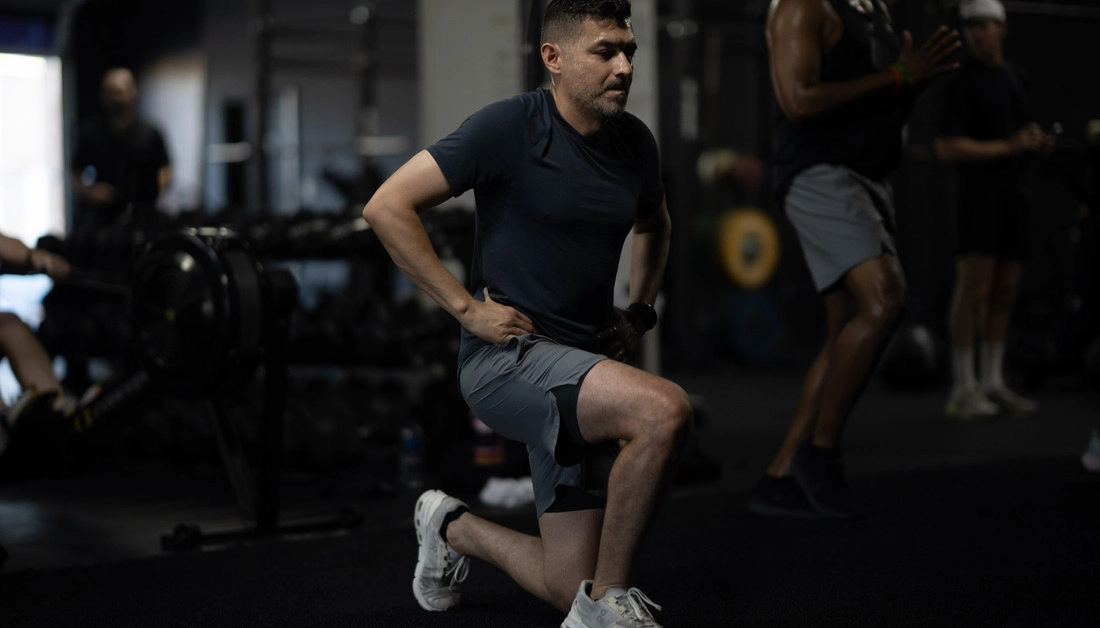
Hypertrophy (the technical term for muscle growth) happens when a muscle is loaded with enough tension, close enough to failure, often enough per week, for long enough to trigger adaptation. That’s the whole point of strength training. A 2020 meta-analysis of 111 studies covering 1,927 participants confirmed what strength coaches have known for decades: resistance training reliably builds muscle across age groups, and the biggest predictors of growth are training volume, load, and consistency. It’s not machine selection or supplements, and it’s definitely not room aesthetics.
The practical version:
None of that requires a boutique. All of it requires a gym set up to do it and a coach who’ll hold the standard.
Find out what your program is actually missing. A consultation includes a movement assessment and a straight answer about where the gap is. Schedule a free consultation and facility tour.
Commercial gyms in Dallas like Life Time, Equinox, or LA Fitness sell access. You get a floor, a rack if you can find one at 6 p.m., and no one paying attention to whether your squat depth is honest or whether you’ve added a plate in six months. Access isn’t the same as training.
Boutique studios sell sweat. The class format prevents the very thing that builds muscle: sustained work on the same lift, at the same movement pattern, with load that climbs over a training block. You leave tired, but that’s not the same as leaving stronger.
CrossFit boxes vary wildly, and the best ones do program well. The typical one runs random WODs that hit conditioning hard and hypertrophy accidentally. If you happen to grow, it’s despite the programming, not because of it.
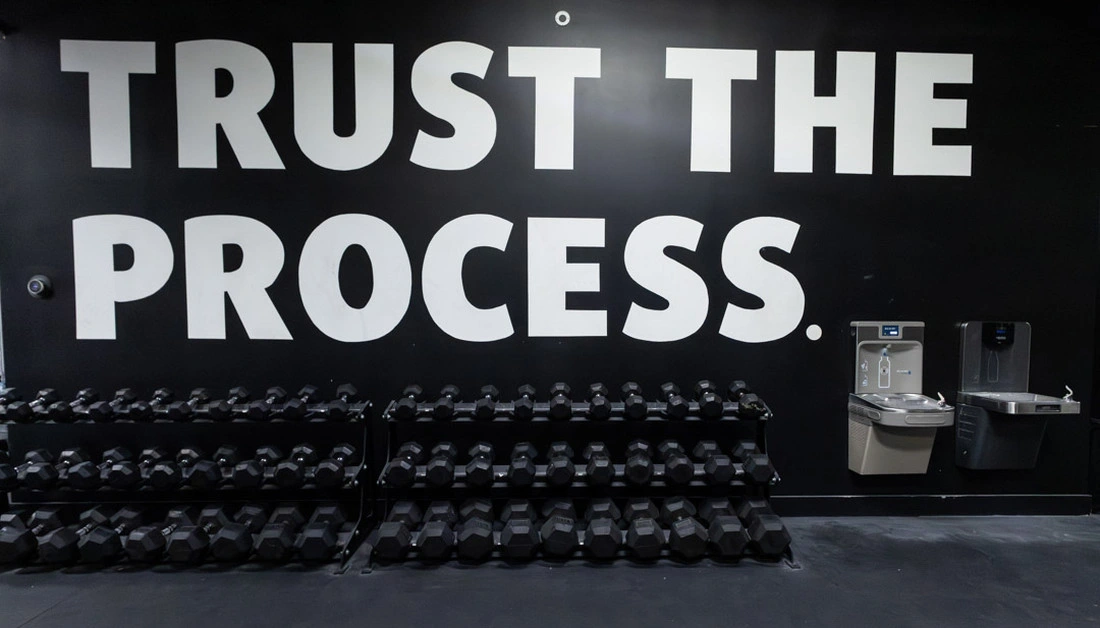
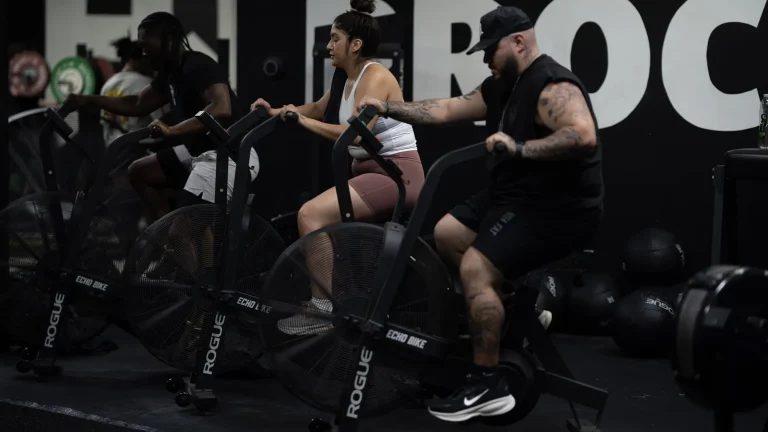
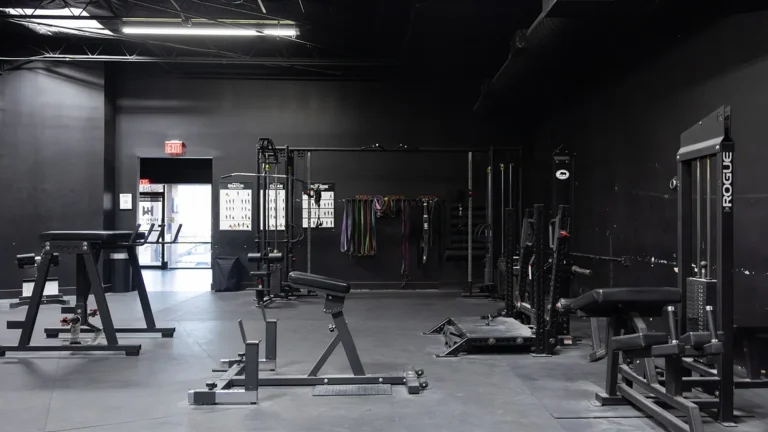
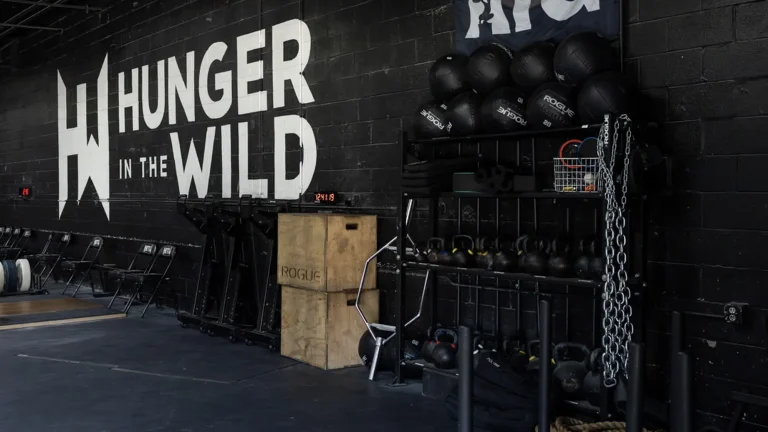
At Hunger in the Wild, the strength floor is set up so the boring, effective work is easy. Competition-grade racks. Calibrated plates. Competition kettlebells. A dedicated pulling platform. Enough space that you’re not waiting for equipment during peak hours. An Olympic weightlifting coach designed our 6,500-square-foot facility in the Design District, and the equipment ratios show it.
Each session centers on one main movement: back squat, bench press, deadlift, or overhead press. Load is assigned as a percentage of a tested working max, not chosen by feel on the day. The 2026 ACSM resistance training guidelines recommend heavier loads near 80% of one-rep max across 2 to 3 sets when strength is the goal, and roughly 10 sets per muscle group per week when hypertrophy is part of the plan.
Accessories are selected to balance the primary lift, not to fill time. Rows offset pressing volume, hinge variations support the deadlift, and single-leg work corrects the side you favor without noticing.
The part you cannot replicate alone is a coach standing three feet away, watching your hip shift at the bottom of a squat and cueing it before rep four. Programming runs on TeamBuildr in periodized blocks (accumulation, intensification, peaking) and class sizes stay small so our coaches can give that feedback every session, not once a month.
Both options cost money every month, but only one of them assigns you a plan. Here’s the honest comparison:
What you are comparing | Coached strength at HITW | Big-box membership |
Programming | Written in cycles: hypertrophy, strength, intensity phases | You write it, or an app does |
Load selection | Percentage of your tested max, adjusted weekly | Whatever felt right last time |
Technique feedback | Every session, every rep that needs it | None unless you buy personal training |
Accountability | A coach notices when you miss two weeks | Nobody notices |
Equipment access at peak hours | Session structure guarantees a rack | Wait for a rack at 5:30 PM |
Cost structure | One membership covers coaching and open gym | Membership plus per-session training fees |
The comparison is not about intensity. Plenty of people train hard at a big-box gym. It’s about whether anyone measures results and adjusts the plan when the number stops moving.
Train under a coach instead of guessing. Strength classes run four times a day on Monday, Tuesday, Thursday, and Friday, with programming that progresses on a cycle. Explore the strength program.
The first three weeks are diagnostic. Coaches assess your lifts, mobility, and training history, then set starting loads across the four to six main lifts you’ll run through the block. Volume stays moderate. Technique gets rebuilt where it needs to be.
Weeks four through eight are where the numbers move. Early strength gains come largely from neural adaptation rather than new muscle, which is why squat and deadlift loads tend to climb faster in this window than body composition changes. Visible growth follows a few weeks later, especially when protein and sleep are dialed in.
Weeks nine through twelve are where the program earns its keep. Loads climb, top sets get heavy, and the numbers you couldn’t move in month one start moving. Most members put weight on the bar across every main lift by the end of the block, and most see change in the mirror.
Then the next block starts. That’s the difference between a workout habit and a training age.
See the schedule before you commit. Classes run at 5:30 AM, 6:30 AM, 12:00 PM, and 5:30 PM on Monday, Tuesday, Thursday, and Friday. Check the current class schedule.
Building muscle in Dallas isn’t complicated, but it is specific. You need a primary lift each session, load assigned from a real number, accessory work chosen for balance, and someone qualified watching the reps. Everything else is decoration. If you’ve spent the last year or two working out without getting stronger, the gym is almost always the reason. Random programs, unloaded classes, and no one coaching your reps? That’s not a training environment; it’s a workout venue.
Hunger in the Wild was founded in 2016 by Kyle Dosterschill, a former top-ranked USA Olympic weightlifter and USAW Level-2 National Coach, on the premise that coaching quality is the product. Classes stay small so coaches can teach position rather than count reps, and programming runs in cycles so progress is something you can point to, not something you hope for. The strength floor in the Design District is not the kind of room where you talk yourself out of adding a plate.
A free consultation includes a facility tour, a movement assessment, and a program recommendation based on what you are actually training for. Book your free consultation.