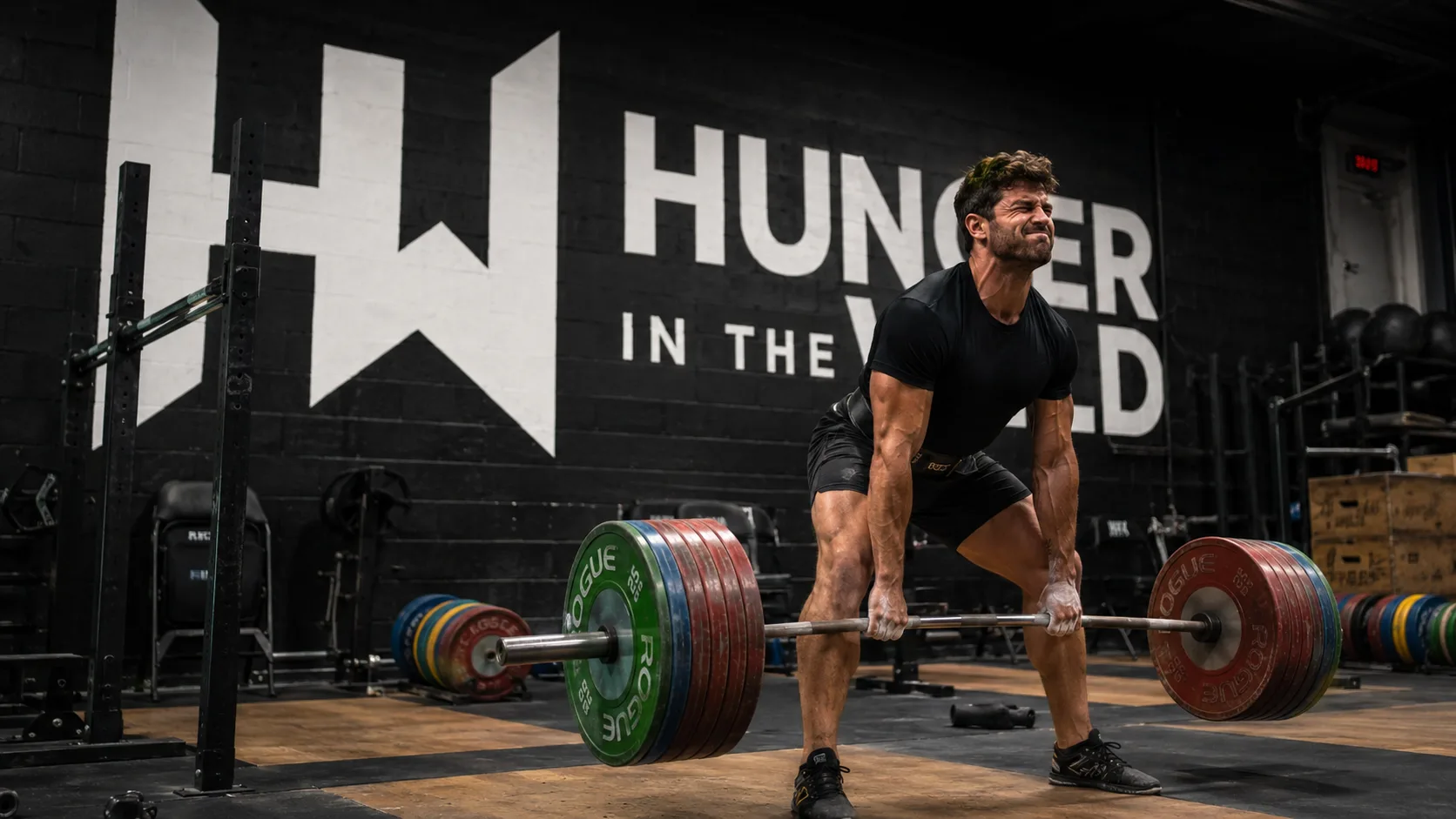
Serious athletes in Dallas usually reach the same wall at some point. The commercial gym did its job for a couple of years, but the racks are always occupied at the hours you can train, nobody’s watching your setup, and the program running in your head is starting to feel stale. Moving to a real weight-training gym isn’t about upgrading the equipment. It’s about upgrading whether anyone is helping you get better at using it.
The definition of “serious” here is straightforward. You train because you care about the outcome, you’ve been at it long enough to know the difference between a good session and a wasted one, and your questions have gotten more specific than “what should I lift today.” That’s the athlete Hunger in the Wild Gym’s coached strength program is built for, in a 6,500-square-foot facility in the Dallas Design District that treats programming as the product.
The best weight training gym in Dallas for a serious athlete is the one that programs your training, coaches your reps, and tracks whether the numbers are actually moving. Access-based gyms hand you a floor and expect you to bring the plan. Boutique studios sell a workout, not a training age.
At this level, what matters is coaching quality, programming structure, equipment ratio at peak hours, and whether the room is full of people training with the same intent. Hunger in the Wild is set up for that specific athlete: someone who’s past the beginner curve and ready for a training environment that assumes it.
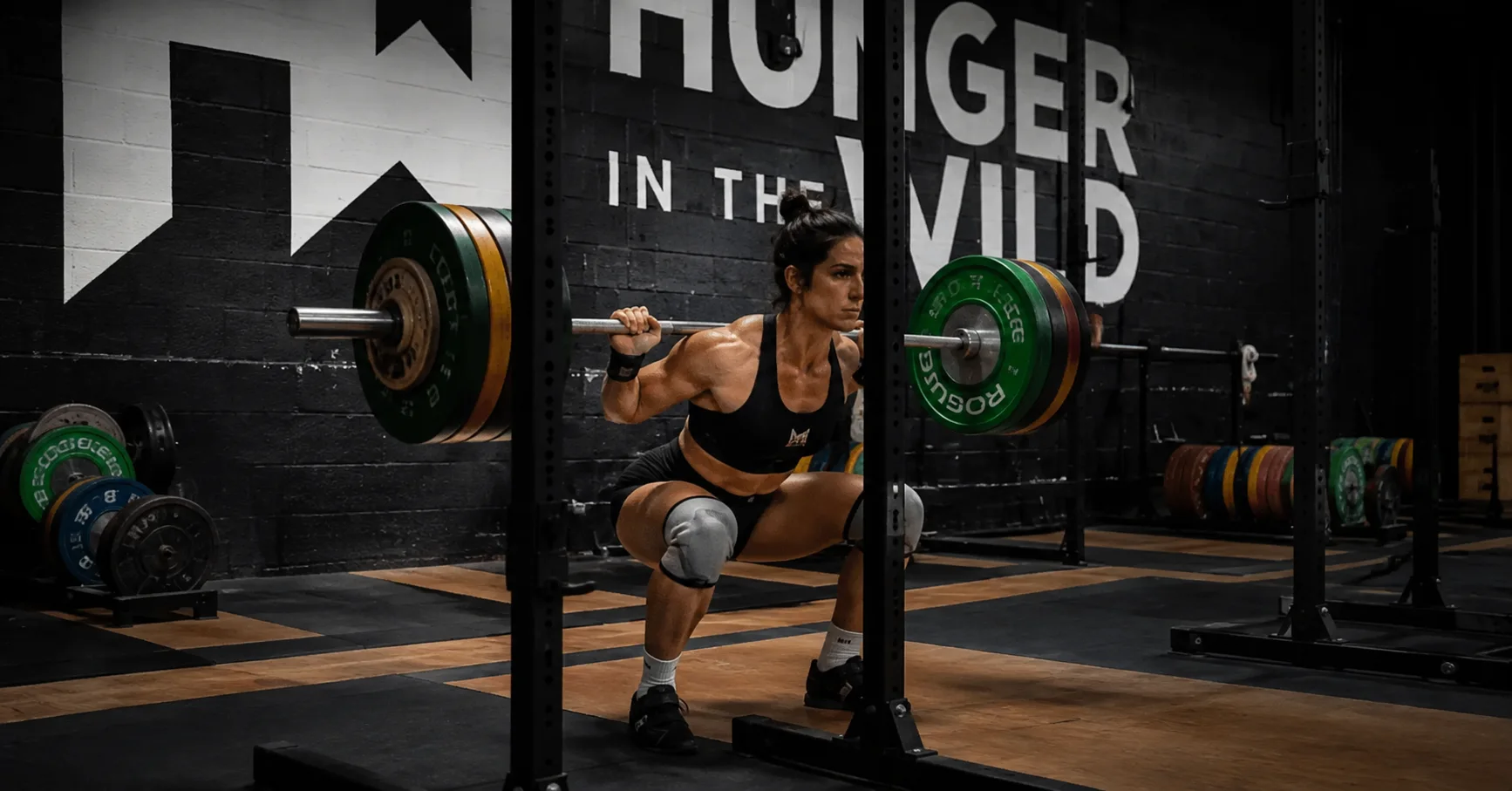
Three things separate a real weight training gym from a room that happens to have weights in it.
Programming that runs in blocks, not sessions. A serious athlete’s training is planned in cycles that build on each other. An accumulation phase adds volume, an intensification phase raises the load, a peaking phase sharpens output for a target. A 2017 meta-analysis in Sports Medicine covering 18 studies and 646 lifters found that periodized programs produced meaningfully greater strength gains than non-periodized training. A gym without block programming is just a place to work out.
Coaching on every rep, not every quarter. The 2026 ACSM resistance training guidelines confirm what coaches have argued for decades: technique breakdown at heavy loads is where injuries happen and where progress stalls. A serious gym has eyes on the bar, while a commercial gym just has a check-in kiosk.
Equipment ratios that hold up at 5:30 PM. A rack you can’t access when you can actually train is a rack you don’t have. Facility design matters, and so does membership cap.
Anything else, including the room’s aesthetic and branded merchandise, is downstream of those three.
Commercial chains like Life Time, Equinox, and LA Fitness are optimized for volume. That’s the business model. It means peak-hour equipment access is thin, coaching is a paid upsell, and there’s no programming layer connecting one session to the next. Fine for someone who writes their own program and doesn’t need anyone watching. Insufficient for someone chasing a real number.
Boutique studios in the Orangetheory, Barry’s, and F45 category are optimized for a class experience. Movements rotate constantly, load selection is by feel, and the coaching is one instructor for a floor of twenty. A serious athlete gets stronger despite this format, not because of it.
CrossFit boxes vary. Well-programmed ones can support a serious athlete’s general strength and conditioning. Most run varied WODs where the barbell work is the appetizer and the metcon is the entree. That trade doesn’t work for someone whose main goal is measurable strength gain.
See what a serious gym floor looks like. A consultation includes a facility tour and an honest read on whether the environment fits your training. Schedule a free consultation and facility tour.
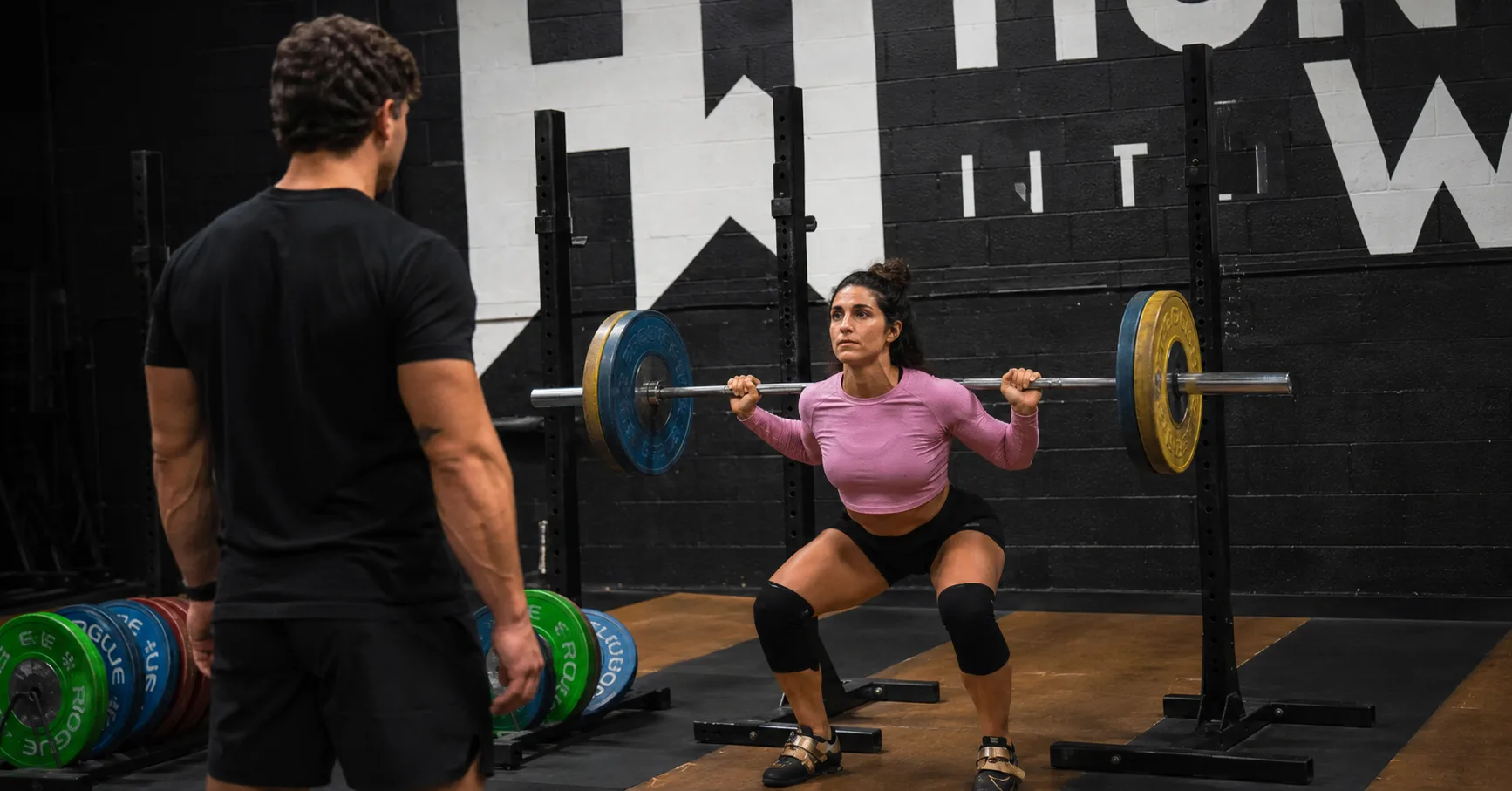
The programming runs on TeamBuildr in periodized blocks that any experienced lifter will recognize. Sessions center on an anchor lift (squat, bench, deadlift, overhead press, or Olympic variant), with loads prescribed as a percentage of a tested working max. Accessory work is selected to support the anchor, not to burn time. Every phase is logged so a coach can look at your last block before writing the next one.
The floor is set up the way athletes want it. Competition-grade racks. Calibrated plates. Competition kettlebells. A dedicated pulling platform. Chalk expected. The room is quiet enough to think in and loud enough to lift heavy in.
Class sizes stay capped low so coaching happens on every rep that needs it. The staff includes Kyle Dosterschill (former top-ranked USA Olympic weightlifter, USAW Level-2 National Coach, more than twenty years coaching), Ash Morris-Williams (Director of Programming), and Jessica Dosterschill. That coaching depth is unusual for a Dallas facility this size, and it’s the reason serious athletes tend to stay once they train here.
Here’s how a serious athlete should actually evaluate the options:
Gym criterion for a serious athlete | Commercial gym | Boutique studio | Hunger in the Wild |
Programming layer | None | Class-of-the-day | Block periodization |
Load prescription | Self-selected | By feel | Percentage of tested max |
Coaching per session | Paid extra | One coach for a large class | Every rep in a small class |
Rack access at 5:30 PM | Wait | Not applicable | Session structure guarantees it |
Training-age progression | Uneven | Flat after a few months | Tracked across cycles |
Community of similarly serious athletes | Rare | Fitness-focused, not sport-focused | High density |
The categories that matter for a serious athlete are all on the left side of the table. If a gym can’t answer questions about programming, load prescription, and coaching depth, it isn’t a serious training environment. It’s a facility.
Train under a coach on a real program. Strength classes run three times a day, Monday through Friday, on a block-periodized cycle. Explore the strength program.
Someone who trains with a specific outcome in mind, understands the difference between programming and workouts, and is looking for a gym that assumes both.
Most productive strength programs land at three to five sessions per week. A 2018 meta-analysis of 22 studies found that training a muscle group two to three times per week produced greater hypertrophy than once weekly at equated volume, which is why most serious programs distribute frequency across the week rather than stacking it into a single session.
Yes. The strength program runs in cycles that can be aligned with meet dates, event prep, or off-season blocks. Personal training is available for athletes who need programming outside the group class structure.
Yes. The coaching depth, equipment ratio, and programming structure are built for exactly that lifter. The class format also puts you in the same room as other experienced athletes, which most Dallas gyms can’t replicate.
1350 Manufacturing Street, Suite 204, in the Dallas Design District (75207). The facility serves athletes across Uptown, Oak Lawn, Downtown, West Dallas, Bluffview, Oak Cliff, and Irving/Las Colinas.
See the schedule before you commit. Sessions run at 6:00 AM, 12:00 PM, and 5:30 PM, Monday through Friday. Check the current schedule.
A serious athlete’s time is the most expensive input in the training equation. Spending it in a facility that doesn’t program, doesn’t coach, and doesn’t track is the fastest way to plateau. The best weight training gym in Dallas for someone at this level is the one where the environment does its share of the work: coaches on the floor, load prescriptions on paper, and other athletes in the room training with the same intent.
HITW was founded in 2016 by Kyle Dosterschill on the premise that coaching quality is the product and the space is where it happens. Class sizes stay small enough to make that real. Programming runs in cycles so members can point at what changed. The strength floor in the Design District isn’t the kind of room where a serious athlete wonders whether they’re in the right place.
A free consultation includes a facility tour, a movement assessment, and a program recommendation based on what you’re actually training for. Book your free consultation.

