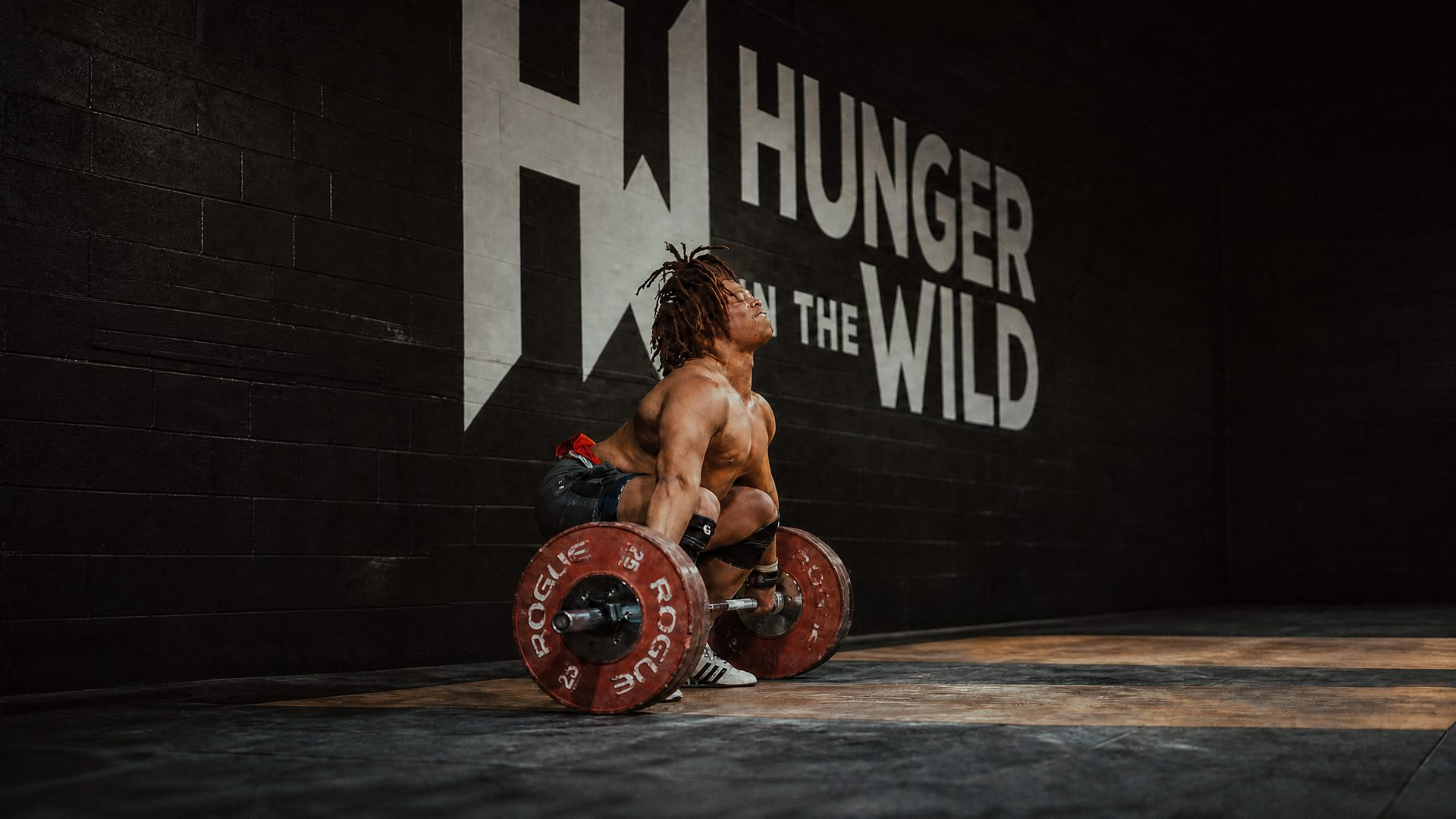
If you’re training Olympic weightlifting with a knee injury, you’re not alone—and you’re not out of the game. Olympic weightlifting with a knee injury is more manageable than most people realize. In fact, Olympic weightlifting has one of the lowest injury rates among competitive sports. When injuries do happen, they’re often chronic and caused by overtraining—not catastrophic events. That’s good news because it means you can continue training with the right adjustments.
At Hunger in the Wild, we’ve helped dozens of athletes train around injuries, especially knee-related issues. With strategic programming, you can keep progressing toward your goals, build strength in overlooked areas, and come back stronger.
With the right modifications and coaching, lifters can continue developing their skills while respecting recovery needs through Hunger In The Wild’s
Olympic Weightlifting Gym in Dallas.
Smart Recovery for Olympic Weightlifters with Knee Injuries
The most common weightlifting injuries—like patellar tendinitis or minor ligament irritation—are typically caused by repeated stress. Fortunately, these can often be trained around. Our expert coaches regularly help athletes continue training through:
- Knee tendinitis (patellar, quad)
- Mild MCL irritation or strains
- Hip impingement
- Lower back tightness from overloading
These issues tend to flare during full-depth squats, cleans, and jerks. But if you reduce the triggering movements and increase strength in supportive areas (like the upper body and posterior chain), you can stay in the game. Smart recovery is about minimizing aggravation and maximizing adaptation.
In many cases, shifting the focus to movements that don’t load the knee joint in a compromised position allows for consistent progress. Adding extra recovery methods like soft tissue work, flossing, and strategic mobility can speed healing and increase tissue resilience over time.
Prioritize Upper Body Strength While Lower Body Heals
Too many lifters neglect their upper body until they’re forced to pay attention. A knee injury is a perfect opportunity to focus on overhead strength, postural control, and balanced development.
Training the upper body in a structured and progressive way helps maintain intensity and workload, which keeps you mentally and physically engaged. Plus, you’ll return to full Olympic lifting with greater pressing power and better control overhead.
Recommended Movements:
- Seated Barbell or Dumbbell Press (strict or push)
- Incline Dumbbell Bench Press
- Weighted Pull-Ups and Rows
- Rear Delt Flys, Lateral Raises, and Tricep Extensions
These movements challenge the shoulders, arms, and back—key muscle groups that support jerk stability, snatch turnover, and grip strength. Keep intensity high, and don’t be afraid to train for hypertrophy. That extra muscle will serve you well when you’re back under a barbell.
Modify Squats: Isometric and Tempo Variations
Just because deep squats are painful doesn’t mean you can’t squat at all. Isometric and tempo variations allow you to maintain motor control and quad strength without aggravating your knee.
These modifications are also great for reinforcing position awareness and bracing mechanics—especially when your goal is to return to heavy squatting with confidence.
Try These:
- Wall Sits (30–60 seconds, progress to weighted)
- Spanish Squats with a Band
- Tempo Box Squats (3–5 second eccentric)
- Split Squat Isometrics at 90°
Use a tempo approach to control the descent and minimize explosive loading through the knee. Isometric holds can stimulate strength at specific joint angles, improving muscular recruitment and endurance in a safe, joint-friendly way.
Posterior Chain Training: Always in Season
If flexion and extension cause pain, shift to hip-dominant training. Strengthening your posterior chain helps you pull heavier, keep better bar path, and avoid future injury.
This is also a great opportunity to identify weaknesses and build a stronger foundation. Posterior chain training doesn’t just support Olympic lifts—it makes your entire movement system more resilient.
Go-To Posterior Movements:
- Romanian Deadlifts (DB or barbell)
- Stiff-Legged Deadlifts
- Good Mornings
- Glute Ham Raises, Hip Thrusts, Reverse Hypers
- Banded Kickbacks and Back Extensions
Each of these targets the glutes, hamstrings, and lower back in different ways. Cycle through rep ranges—some heavy, some moderate with high volume—to get the most out of these movements. They’re not just injury-safe; they’re critical for strength and longevity.
Download Our Free 5-Day Program for Olympic Weightlifting With a Knee Injury
We’ve created a structured 5-day training split specifically for athletes with lower body limitations. This program helps you stay consistent and keep building strength without aggravating your knees.
Inside the Program:
- Upper body pressing, pulling, and rowing
- Posterior chain development
- Isometric squats and safe squat alternatives
- Strategic mobility and core work
👉 Download the Free Program Here
Final Thoughts
An injury doesn’t have to set you back. It’s a chance to double down on the things you’ve been neglecting and come back better. Olympic weightlifting with a knee injury requires smart coaching, patience, and targeted programming—but it’s absolutely possible to keep progressing.
If you’re in Dallas and need help, come see us at Hunger in the Wild. We’ll build a custom return-to-training plan that meets you where you are.
And if you’re training remotely, grab the free program above and follow the principles outlined in this article. Recovery isn’t about doing less—it’s about doing better.
📅 Book a Free Personal Training Consultation and Facility Tour Today!
📍 Schedule a Free Consultation to Learn More About Our Group Fitness Classes!
🔗 Check Out Our Online Training Programs and Remote Coaching Services!